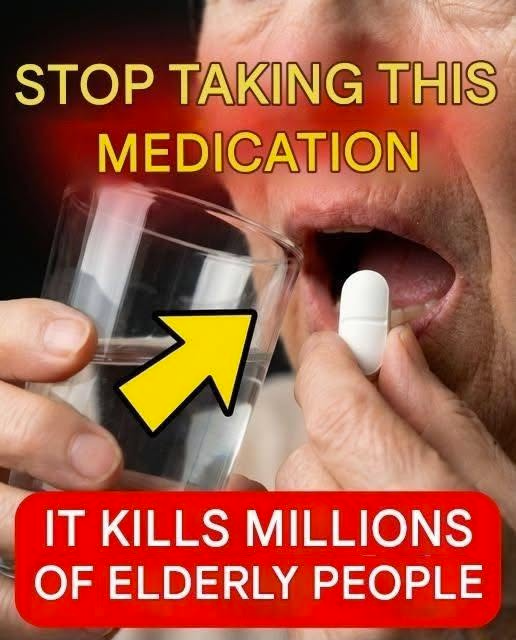
As people get older, taking several medications at the same time becomes increasingly common. Some medicines are essential and can significantly reduce the risk of serious illness, while others may need to be reviewed as a person's health, kidney function, blood pressure or other conditions change.
That is why a dramatic message such as "STOP TAKING THIS MEDICATION" can be dangerous.
The safer message is this:
Never stop a prescribed medication on your own. Instead, know which medicines deserve a medication review with your doctor or pharmacist.
Age-related changes can affect how the body processes medicines, and taking several medications together can increase the possibility of side effects and interactions. The FDA specifically advises older adults not to skip or stop prescribed medicines without first consulting a healthcare professional.
Here are five medication groups that deserve particular attention.
1. NSAID Painkillers
Nonsteroidal anti-inflammatory drugs, commonly called NSAIDs, include medications such as ibuprofen and naproxen.
They're widely used for headaches, muscle aches, arthritis and other types of pain.
The problem is that regular or long-term use can be more complicated for older adults.
NSAIDs can contribute to:
- Stomach or intestinal bleeding
- Kidney problems
- Increased blood pressure
- Fluid retention
- Cardiovascular complications in certain people
The National Institute on Aging notes that long-term use of some NSAIDs can cause internal bleeding or kidney problems and may be unsafe for many older adults.
There is also a specific heart concern.
NSAIDs can cause sodium and water retention and may interfere with the effect of certain diuretics. The American Heart Association's heart-failure guidance identifies NSAIDs as medications that can worsen or precipitate heart failure in susceptible patients.
What should you do?
This doesn't mean everyone should stop taking ibuprofen or naproxen.
Instead, if you're older, have high blood pressure, kidney disease, heart failure, a history of stomach bleeding, or take several other medications, ask a healthcare professional whether your pain medication is appropriate.
2. Certain Benzodiazepines
Benzodiazepines are prescription medicines that can be used for conditions such as anxiety, insomnia and seizures.
Examples include medications such as:
- Diazepam
- Lorazepam
- Alprazolam
- Clonazepam
These medications can be appropriate in certain circumstances.
However, older adults can be particularly vulnerable to some of their adverse effects.
The National Institute on Aging notes that benzodiazepines may increase the risk of problems such as memory difficulties, confusion, falls and fractures in older adults.
That doesn't mean someone taking one should suddenly stop.
In fact, abruptly stopping some benzodiazepines after regular use can cause withdrawal symptoms and potentially serious complications.
If you're concerned about a benzodiazepine, speak with the prescribing clinician about whether the medication is still necessary and whether the dose or treatment plan should change.
3. Some Medications With Anticholinergic Effects
Another group deserves attention because some medications can have anticholinergic effects.
These effects can occur with medications used for different conditions, including certain allergies, bladder problems, nausea, depression and muscle spasms.
The concern isn't that every medication with an anticholinergic effect is automatically dangerous.
Rather, older adults may be more susceptible to certain side effects, especially when several medications with these properties are combined.
Potential problems can include:
- Dry mouth
- Constipation
- Blurred vision
- Difficulty urinating
- Confusion
- Cognitive problems
The National Institute on Aging notes that some medications with anticholinergic effects may be necessary, but that healthcare professionals should consider whether alternatives with fewer side effects are available.
A useful question to ask
If you're taking several medications, ask your pharmacist:
"Could any of these medicines have anticholinergic effects, and could they be interacting with each other?"
A medication review can sometimes identify problems that aren't obvious when each medicine is considered separately.
4. Certain Decongestants
Some people don't think of cold and flu medicines as medications that can affect the heart.
But certain oral decongestants can influence blood pressure and heart rate.
Examples include products containing ingredients such as pseudoephedrine or phenylephrine.
These medications work partly by constricting blood vessels.
That can be problematic for some people with cardiovascular conditions.
The American Heart Association has noted that decongestants can increase blood pressure and may be particularly concerning for people with high blood pressure or certain forms of heart disease.
This is particularly important because many people purchase cold medications without realizing that they contain ingredients that can affect cardiovascular health.
Before taking a cold medicine
Check the active ingredients.
If you have:
- High blood pressure
- Heart disease
- A history of stroke
- Heart failure
- Other cardiovascular conditions
ask a pharmacist or doctor which products are appropriate for you.
5. Medications That Can Cause Fluid Retention
Some medications can cause the body to retain fluid or can worsen existing heart failure.
This is particularly important for people who already have cardiovascular disease.
NSAIDs are one example.
Certain diabetes medications, including the thiazolidinedione class, are another example identified in heart-failure guidelines because of their association with fluid retention and worsening heart failure in susceptible patients.
This is why medication decisions cannot be separated from the rest of a person's health.
A medication that is appropriate for one person may require caution in another person because of kidney function, heart disease, blood pressure, age or other medications.
The Biggest Mistake: Stopping Medication Suddenly
This may be the most important message in the entire article.
If you see a social media post telling you to immediately stop a medication, don't follow that instruction blindly.
Some medications can cause serious problems if stopped suddenly.
The FDA advises patients not to skip doses or stop prescribed medication without first consulting a healthcare professional, even if they feel better or believe the medication isn't working.
The American Heart Association similarly advises people taking heart-failure medications not to stop or change their medication without discussing it with a healthcare professional or pharmacist.
Some medicines require gradual dose reduction rather than abrupt discontinuation.
The exact process depends on the medication and the person taking it.



0 comments:
Post a Comment