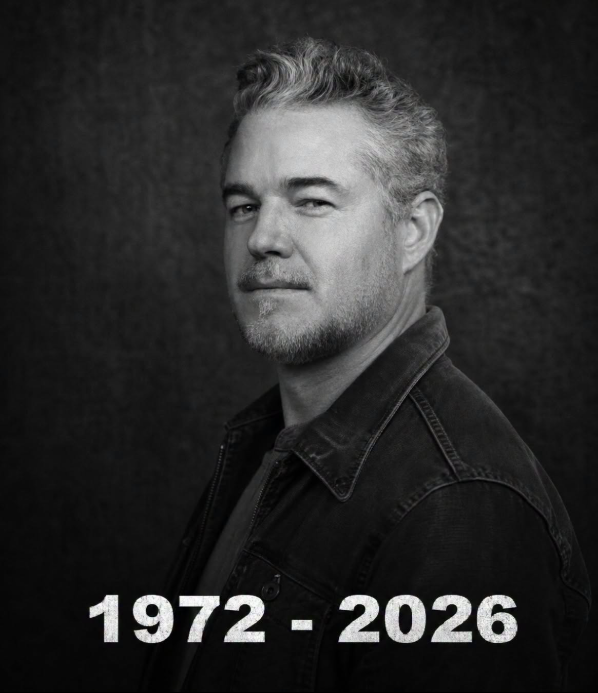
The black-and-white photograph circulating online carries a simple message: “1931–2026.” Beneath it is a familiar face, a cowboy hat, a weathered expression, and the words, “The World Has Lost A True Hollywood Icon…”
The image is referring to Robert Duvall, one of the most respected American actors of his generation.
And in this case, the sad news behind the viral-style post is real.
Duvall died on February 15, 2026, at the age of 95, at his home in Middleburg, Virginia. His wife, Luciana Duvall, announced that he had died peacefully and that she was by his side. His publicist also confirmed his death.
For millions of movie fans, however, Robert Duvall was much more than an actor who appeared in famous films. He was a performer whose presence could transform an ordinary scene into something unforgettable.
He played mob lawyers, soldiers, cowboys, preachers, lawmen, criminals, fathers, troubled men and ordinary Americans. Sometimes he needed only a few lines to dominate a scene.
His career stretched across more than six decades and included some of the most important films and television productions in American entertainment history.
The photograph appears designed to evoke Duvall's long association with rugged American characters, particularly the Western roles that became an important part of his later career.
The dates shown — 1931–2026 — are consistent with Robert Duvall's life.
He was born January 5, 1931, in San Diego, California. He died February 15, 2026, aged 95. The Television Academy and the Academy of Motion Picture Arts and Sciences both now list him among those who died in 2026.
So although the wording “The World Has Lost A True Hollywood Icon” is emotional and promotional in style, the underlying death announcement is not a hoax.
There is, however, an important distinction.
The photograph itself should not necessarily be treated as an official obituary notice. Viral social-media graphics can use archival photographs, altered designs and dramatic headlines. The reliable part of the story is the independently reported confirmation of Duvall's death.
That distinction matters when sharing celebrity death posts online.
Robert Duvall did not become famous overnight.
His journey was very different from the traditional Hollywood-star story.
He wasn't known primarily for glamorous appearances or for fitting the conventional image of a leading man. Instead, his greatest strength was his ability to make characters feel real.
The Washington Post described him as an actor capable of moving through an astonishing range of characters, from lawmen and outlaws to businessmen and troubled Southern men.
That versatility became his trademark.
Duvall could enter a movie without necessarily being the central character and still leave audiences remembering him years later.
His screen debut came in “To Kill a Mockingbird” (1962), where he played the mysterious Boo Radley.
It was a relatively quiet performance, but it introduced audiences to an actor who would eventually become one of the defining performers of his generation. The Television Academy lists the role as his film debut.
From there, his career expanded rapidly.
He worked in television and film before becoming closely associated with the generation of filmmakers and actors who reshaped Hollywood during the 1960s and 1970s.
For many viewers, Robert Duvall will forever be remembered as Tom Hagen in The Godfather.
Hagen wasn't the loudest character.
He wasn't the man making dramatic speeches.
He wasn't the person holding the gun.
Instead, he was the calm, intelligent adviser who often stood near the center of the Corleone family's power.
Duvall understood something important about acting: sometimes the most powerful character in a scene is the person who says the least.
His performance as Hagen helped make the character unforgettable.
He appeared in the first two Godfather films, working alongside actors including Marlon Brando and Al Pacino. His performance became one of the defining supporting roles of the era.
Duvall's ability to communicate through facial expressions, pauses and subtle changes in tone became one of his greatest strengths.
He didn't always need to explain what his character was thinking.
If The Godfather demonstrated Duvall's subtlety, “Apocalypse Now” demonstrated another side of him entirely.
In Francis Ford Coppola's 1979 Vietnam War epic, Duvall played Lieutenant Colonel Bill Kilgore.
The character is one of the most memorable figures in the movie.
Kilgore is confident, fearless and almost bizarrely calm amid chaos.
Duvall's performance became legendary.
The character's cowboy hat and larger-than-life personality also helped create an image that could easily explain why modern viral graphics sometimes associate Duvall so strongly with rugged American masculinity and Western imagery.
His performance earned enormous attention and became one of the most recognizable supporting performances in modern cinema.
It was a completely different character from Tom Hagen.
And that was precisely the point.
Robert Duvall refused to become trapped by one type of role.
Perhaps the most important performance of Duvall's career came in “Tender Mercies.”
In the 1983 film, he played Mac Sledge, a troubled former country singer struggling with alcoholism, regret and the possibility of rebuilding his life.
It was not a conventional Hollywood performance.
The character was vulnerable, damaged and quiet.
Rather than turning him into a stereotypical movie hero, Duvall portrayed a man attempting to recover his humanity.
The performance earned him the Academy Award for Best Actor.
It was the defining individual award of his career.
The Television Academy notes that Duvall won the Oscar for his performance in Tender Mercies and even wrote the songs performed by his character in the movie.
That detail says a great deal about the actor.
He didn't simply show up, memorize lines and perform.
He wanted to understand the world of his characters.
For Tender Mercies, he immersed himself in the culture and music surrounding the story.
The result was a performance that felt less like acting and more like watching a real person struggle with his past.
For many fans, however, Duvall's most beloved performance came on television.
That was Augustus “Gus” McCrae in the 1989 miniseries “Lonesome Dove.”
The role became one of the greatest Western performances of his career.
Gus was funny, stubborn, courageous and deeply human.
He wasn't simply a cowboy stereotype.
He was a complicated man with friendships, regrets, dreams and weaknesses.
Duvall brought enormous warmth to the character.
The Television Academy records that Lonesome Dove was Duvall's favorite role among the characters he played.
That is especially meaningful because his filmography contained so many celebrated performances.
For Duvall himself, Gus McCrae stood out.
And it is easy to understand why.
The character allowed him to combine humor, toughness, tenderness and melancholy.
Duvall's connection to Western stories continued throughout his career.
He appeared in Western films and television productions and later starred in “Broken Trail,” another Western miniseries.
In Broken Trail, Duvall played Prentice Ritter.
The performance earned him an Emmy, adding another major television honor to his collection.
His Western roles were particularly memorable because Duvall didn't treat the genre as simply an opportunity to wear a cowboy hat and ride a horse.
He understood that Western stories are often really stories about aging, friendship, loneliness, morality and survival.
That made his characters feel timeless.
Calling Robert Duvall an actor doesn't tell the entire story.
He was also a director, writer and producer.
One of his most personal projects was “The Apostle,” released in 1997.
Duvall wrote, directed and starred in the film.
The project had reportedly been difficult to get made, and he ultimately helped finance it himself. The movie centered on a troubled Pentecostal preacher searching for redemption.
His performance earned another Academy Award nomination.
That project demonstrated something important about Duvall.
He wasn't interested only in fame.
He wanted to tell stories he believed were worth telling.
He wanted control over the characters and environments that interested him.
And he was willing to take considerable risks to make those stories happen.
Duvall's career was recognized repeatedly by the Academy.
He received seven Academy Award nominations during his career and won Best Actor for Tender Mercies.
His nominations covered an unusually broad range of performances.
That is one reason his legacy is so difficult to reduce to a single film.
For some people, he is Tom Hagen.
For others, he is Colonel Kilgore.
For Western fans, he is Gus McCrae.
And still others may remember him from The Apostle, The Great Santini, Network, True Grit, The Judge, The Road, Open Range or one of his many other projects.
One of the most remarkable things about Robert Duvall was simply how long he remained relevant.
His professional screen career extended across generations.
He worked with filmmakers and performers from multiple eras of Hollywood.
The Television Academy describes his career as long and immensely successful, while TCM notes that he continued appearing in major productions across six decades.
Even as he grew older, directors continued to seek him out.
Many performers become strongly associated with one particular era.
Duvall became associated with quality itself.
When his name appeared in a cast, audiences often knew they were going to get something memorable.
There was something unusual about Robert Duvall's approach.
He didn't seem desperate to show the audience that he was acting.
Instead, he often allowed the character to exist naturally.
He could make silence meaningful.
That quality was especially useful in scenes involving powerful personalities.
Instead of competing for attention, Duvall often allowed the other actor to dominate the conversation while subtly communicating what his character was thinking.
Roger Ebert famously praised that aspect of his acting, emphasizing Duvall's ability to make his fellow actors look better and to charge scenes even when he wasn't speaking.
That is perhaps one of the highest compliments an actor can receive.
A great actor doesn't simply perform.
A great actor changes everyone around him.
Duvall continued working remarkably late into life.
His final credited onscreen role was in “The Pale Blue Eye” (2022), in which he appeared alongside Christian Bale. TCM identifies that as his final onscreen role.
By then, he had already spent roughly seven decades working professionally.
Even fewer maintain the level of respect Duvall had earned.
His later career became a reminder that acting does not necessarily have an expiration date.
A performer with experience can bring something to a character that cannot be learned in a classroom.
All of that becomes part of the performance.
Robert Duvall died on February 15, 2026.
His wife, Luciana Pedraza Duvall, said he passed peacefully at home, surrounded by love and comfort. A representative also confirmed that he died at his home in Middleburg, Virginia, with his wife by his side.
No cause of death was publicly given in the initial announcement.
That is important because social-media posts sometimes add dramatic details that were never confirmed.
In Duvall's case, there is no need to invent a tragic final chapter.
His life and career already tell a remarkable story.
Luciana Duvall's message offered a particularly personal glimpse into the man behind the performances.
She described him not simply as an Academy Award-winning actor but as her husband, friend and someone who gave everything to his characters.
She emphasized his passion for his craft and his love of characters, food and conversation.
That description feels appropriate for someone whose career was built around observation and humanity.
Robert Duvall spent his professional life studying people.
Then he transformed what he observed into characters.
The photograph circulating online may be designed to attract attention.
The phrase “The World Has Lost A True Hollywood Icon” is clearly written in the emotional style commonly used by viral social-media posts.
But behind that dramatic presentation is a genuine story.
A major American actor has died.
A performer who worked with Coppola.
An actor who shared the screen with some of the biggest names in American cinema.
And, above all, a character actor whose work became part of the cultural memory of several generations.
The Academy's 2026 memorial list includes Duvall among the film industry's departed, further confirming the significance of his passing.
There is something different about losing an actor compared with losing someone whose work exists only in memory.
Actors leave behind performances.
Robert Duvall left behind dozens.
A viewer can still watch Tom Hagen calmly navigating the Corleone family.
They can still watch Colonel Kilgore walk through the chaos of Apocalypse Now.
They can still watch Mac Sledge attempt to rebuild his life in Tender Mercies.
They can still meet Gus McCrae again in Lonesome Dove.
They can still discover his work in movies made decades ago.
That is one of cinema's strange gifts.
Duvall's career is unlikely to disappear simply because he is gone.
In fact, his death may encourage a new generation of viewers to revisit his films.
People discovering The Godfather for the first time will encounter Tom Hagen.
People discovering Apocalypse Now will meet Colonel Kilgore.
Western fans will find Lonesome Dove.
Film students will study Tender Mercies.
Actors will continue studying how Duvall used silence, movement, rhythm and observation.
That is how a cinematic legacy survives.
Not through a viral photograph.
But through people continuing to watch.
The photograph accompanying the viral headline captures only one version of Robert Duvall.
The cowboy hat suggests the Western characters that became so important to his image.
But the real Robert Duvall was much more complicated.
He was not simply a cowboy actor.
He was one of America's great character performers.
He could play a criminal mastermind one year and a broken musician the next.
He could portray a military officer, a preacher, a judge, a lawyer or a Texas Ranger.
His greatest achievement may have been convincing audiences that each one was a completely different human being.
That is extraordinarily difficult.
Duvall once described his acting approach in remarkably simple terms: talking and listening, allowing a scene to find its own way. TCM quotes him describing his method in those terms.
That philosophy helps explain why his performances continue to feel natural.
He didn't need excessive theatricality.
He didn't need to announce every emotion.
That trust became his signature.
Robert Duvall's death also represents the passing of another important link to the golden age of the New Hollywood era.
He belonged to a generation that transformed American filmmaking.
These filmmakers and actors challenged traditional studio formulas and helped create movies that were darker, more complicated and more character-driven.
Duvall was right there in the middle of that transformation.
He wasn't always the person whose face appeared largest on the poster.
But he was often the person who made the movie feel real.
That may be an even more enduring contribution.
Two dates can look surprisingly small on a photograph.
But between those two numbers were 95 years of life.
More than six decades of acting.
And hundreds of unforgettable moments on screen.
The numbers cannot capture all of that.
But they remind us how long Robert Duvall was part of American cultural life.
So, if you see the viral photograph saying “The World Has Lost A True Hollywood Icon,” the central claim is true: Robert Duvall died in 2026 at the age of 95.
The exact graphic, its dramatic wording and any additional claims attached to it should still be treated separately from the confirmed facts.
The confirmed story is already powerful enough.
Robert Duvall was born in 1931.
He became one of the most respected actors of his generation.
He gave audiences unforgettable performances in The Godfather, Apocalypse Now, Tender Mercies, Lonesome Dove, The Apostle and many other productions.
He earned seven Academy Award nominations.
He received major recognition from both film and television institutions.
And on February 15, 2026, his remarkable journey came to an end peacefully at his Virginia home.
But the screen has a long memory.
The next time someone watches The Godfather, they will see Tom Hagen.
The next time Apocalypse Now plays, Colonel Kilgore will appear again.
A Western fan will discover Gus McCrae.
A young actor will study Mac Sledge.
And someone who has never heard of Robert Duvall before may suddenly stop and ask:
Then they will discover a career spanning generations.
That is how true Hollywood legacies survive.
Not because the people live forever.
And Robert Duvall left behind plenty of work worth remembering.
And, without question, one of the great screen performers America ever produced.


0 comments:
Post a Comment