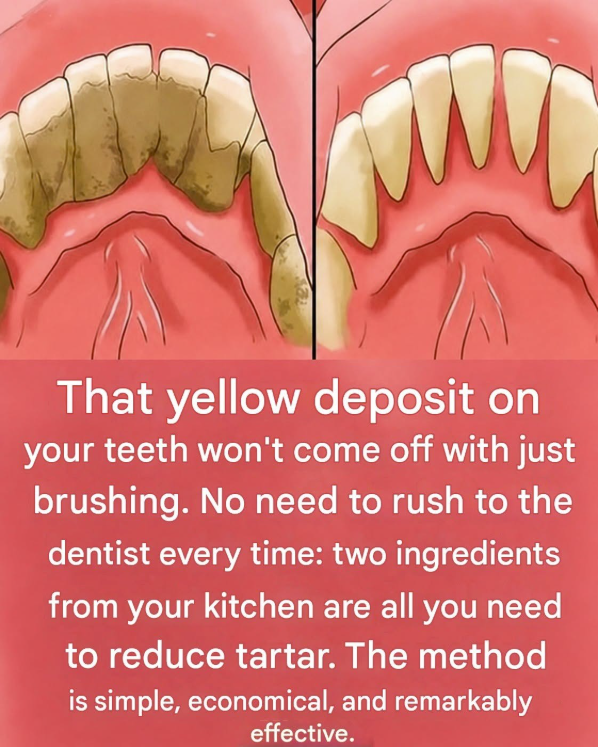
If you have noticed a yellow or brown deposit around your teeth, especially close to the gumline, you may be wondering what it is and whether brushing alone can remove it.
In many cases, the yellow buildup is related to dental plaque that has hardened into tartar, also called dental calculus. Unlike soft plaque, hardened tartar cannot usually be removed effectively with a toothbrush or dental floss. Professional dental cleaning is the standard way to remove it safely.
At the same time, not every yellow-looking area on a tooth is tartar. It can also be caused by normal tooth color, surface staining from foods and drinks, or other dental conditions.
This distinction is important because many social media posts recommend homemade mixtures using ingredients from the kitchen. Although some ingredients may temporarily affect surface stains or plaque, aggressive scrubbing or acidic mixtures can potentially irritate the gums or damage tooth enamel.
The good news is that there are simple, evidence-based habits that can reduce plaque buildup and help prevent tartar from becoming a recurring problem.
What Is the Yellow Deposit on Your Teeth?
Dental plaque is a sticky film containing bacteria that develops on teeth. It forms naturally and needs to be removed regularly through good oral hygiene.
When plaque is not removed effectively, it can harden and become tartar. Tartar can develop above or below the gumline and is much harder to remove than ordinary plaque.
Tartar may appear:
Yellow
Cream-colored
Brown
Darker around the gumline
Rough or hard when you touch it with your tongue
The appearance can vary depending on how long the deposit has been present and whether it has become stained by foods, drinks or tobacco.
One reason tartar can be frustrating is that brushing may make the surrounding teeth look cleaner while the hard deposit remains attached to the tooth.
That does not necessarily mean you are brushing incorrectly. Once plaque has mineralized into tartar, ordinary brushing and flossing are not designed to scrape it away.
Plaque vs. Tartar: What's the Difference?
Understanding the difference between plaque and tartar can help you choose the right approach.
Dental plaque
Plaque is a soft, sticky bacterial film. It develops continuously and can often be removed with proper brushing and cleaning between the teeth.
If plaque remains on the teeth, it can contribute to tooth decay and gum inflammation.
Dental tartar
Tartar is hardened plaque. Once it has mineralized, it becomes firmly attached to the tooth surface.
Brushing twice a day is excellent for preventing and controlling plaque, but it cannot reliably remove established tartar. Professional dental cleaning is generally required.
This is why trying to scrape a hard yellow deposit off your teeth with household objects is not a good idea.
Can Brushing Remove Yellow Tartar?
If the yellow material is soft plaque, regular brushing may remove much of it.
If it is hardened tartar, however, brushing alone is unlikely to remove it.
Dental professionals use specialized instruments and techniques to remove tartar from tooth surfaces. Depending on the person's dental condition, professional cleaning may involve scaling, which removes hardened deposits above and below the gumline.
For everyday prevention, the American Dental Association recommends brushing twice a day with fluoride toothpaste for two minutes. Cleaning between the teeth is also important because toothbrush bristles cannot effectively reach every interdental space.
So if you already have a hard yellow deposit, the goal should not be to brush harder. Instead, focus on preventing additional buildup and arrange a dental examination or professional cleaning when appropriate.
What About Baking Soda and Other Homemade Remedies?
You may see online recipes claiming that two common kitchen ingredients can dissolve or remove tartar.
These claims should be approached carefully.
Baking soda is an ingredient found in some oral-care products, but that does not mean that homemade mixtures can safely remove established tartar. Hardened calculus is a mineralized deposit that generally requires professional removal.
Likewise, using acidic ingredients such as lemon juice or vinegar on teeth is not a good substitute for dental care. Tooth enamel can be affected by acids, and repeatedly exposing teeth to acidic substances can contribute to enamel erosion.
Another common mistake is using excessive force with abrasive powders. A substance that makes teeth temporarily feel smoother does not necessarily mean that it has safely removed tartar.
For that reason, it is better to avoid homemade "tartar removal" recipes that involve aggressive scrubbing, strong acids or sharp objects.
A safer approach is to use proven oral-hygiene methods at home and have hardened deposits removed professionally.
How to Prevent Yellow Tartar From Building Up
Although established tartar needs professional attention, you can significantly improve your daily routine to reduce plaque accumulation.
1. Brush twice a day
Brush your teeth for about two minutes twice a day using fluoride toothpaste.
Make sure you clean all tooth surfaces rather than concentrating only on the front teeth. The gumline is particularly important because plaque can accumulate there.
A manual toothbrush can work well when used correctly. Some people find an electric toothbrush easier for maintaining thorough brushing.
2. Clean between your teeth
A toothbrush cannot adequately clean every area between teeth.
Dental floss, interdental brushes and other interdental cleaning tools can help remove plaque and food debris from these areas.
The best option depends on the size of the spaces between your teeth and your individual dental needs.
3. Don't ignore the gumline
Many people focus on the visible front surfaces of their teeth and overlook the area where the teeth meet the gums.
Plaque accumulation around the gumline can contribute to gum irritation and gingivitis. Tartar can also make it more difficult to keep the area clean.
When brushing, use gentle movements and avoid aggressively scrubbing the gums.
4. Keep up with professional dental cleanings
Professional cleaning can remove deposits that cannot be eliminated through normal brushing.
The frequency of dental visits varies from person to person. Your dentist can recommend an appropriate schedule based on your oral health and risk factors.
Professional cleaning is particularly important if you regularly develop tartar despite maintaining good home care.
Why Tartar Can Cause Gum Problems
Tartar is more than a cosmetic concern.
Hardened deposits can create surfaces where plaque and bacteria accumulate. The longer plaque and tartar remain around the gumline, the greater the possibility of gum irritation.
Early gum inflammation is known as gingivitis. Signs can include:
Red or swollen gums
Bleeding during brushing
Tender gums
Persistent bad breath
Increased plaque or tartar around the gumline
Gingivitis can often be managed successfully with appropriate professional treatment and good oral hygiene. However, untreated gum disease can progress to more serious periodontal disease.
This is one reason it is better to address persistent tartar rather than simply trying to hide its appearance.
Does Yellow Tooth Color Always Mean Tartar?
No.
Natural teeth are not necessarily bright white. The color of healthy teeth can vary from person to person.
Yellow coloration can also come from external staining. Coffee, tea, certain foods and tobacco products can contribute to discoloration.
There is also a difference between tooth whitening and tartar removal.
Whitening treatments are designed to change or reduce certain types of tooth discoloration. They do not replace professional removal of hardened tartar.
If you are unsure whether the yellow area is staining, plaque or tartar, a dentist can examine it and determine the appropriate treatment.
Should You Scrape Tartar Off Yourself?
It is best not to use sharp or improvised objects to scrape deposits from your teeth.
Trying to remove tartar mechanically at home can accidentally injure the gums or damage the tooth surface. It can also be difficult to see what is happening around the gumline.
Professional dental instruments are designed specifically for removing calculus while minimizing unnecessary damage to the surrounding tissues.
If you have a significant hard deposit, professional cleaning is a much safer approach than trying to remove it yourself.
When Should You See a Dentist?
Consider making a dental appointment if you have persistent yellow or brown deposits that do not disappear with normal brushing.
You should also seek professional advice if you experience:
Gums that bleed frequently
Swollen or painful gums
Persistent bad breath
Tooth sensitivity
Loose teeth
Pain when chewing
Receding gums
A hard deposit beneath the gumline
These symptoms do not automatically mean that you have serious gum disease, but they deserve an appropriate dental assessment.
A dentist can determine whether the discoloration is caused by tartar, staining, decay or another issue.
A Simple Daily Routine for Cleaner Teeth
You do not need an elaborate routine to maintain good oral hygiene.
A practical routine can look like this:
Morning:
Brush for two minutes with fluoride toothpaste.
During the day:
Drink water regularly and maintain a balanced diet. If you consume staining drinks such as coffee or tea, maintaining good oral hygiene can help reduce buildup.
Evening:
Clean between your teeth using floss or an appropriate interdental cleaner, then brush for two minutes with fluoride toothpaste.
Regularly:
Attend dental examinations and professional cleanings according to the schedule recommended for you.
The objective is not to make your teeth perfectly white overnight. The more important goal is to keep plaque under control and maintain healthy teeth and gums.
The Bottom Line
That yellow deposit around your teeth may be tartar, particularly if it feels hard and remains firmly attached despite brushing.
The important distinction is that soft plaque can generally be controlled at home, while established tartar usually requires professional dental cleaning.
Homemade mixtures promoted online may sound attractive because they are inexpensive and easy to prepare, but they should not replace evidence-based dental care. Avoid aggressive scraping and acidic or highly abrasive DIY treatments.
Instead, focus on the basics: brush twice a day with fluoride toothpaste, clean between your teeth every day, pay attention to the gumline, and arrange professional dental care when tartar has already formed.
A cleaner-looking smile is useful, but healthy gums and teeth are the bigger goal. Taking a few minutes each day to control plaque can make professional dental care easier and help reduce the chance of significant tartar buildup over time


0 comments:
Post a Comment