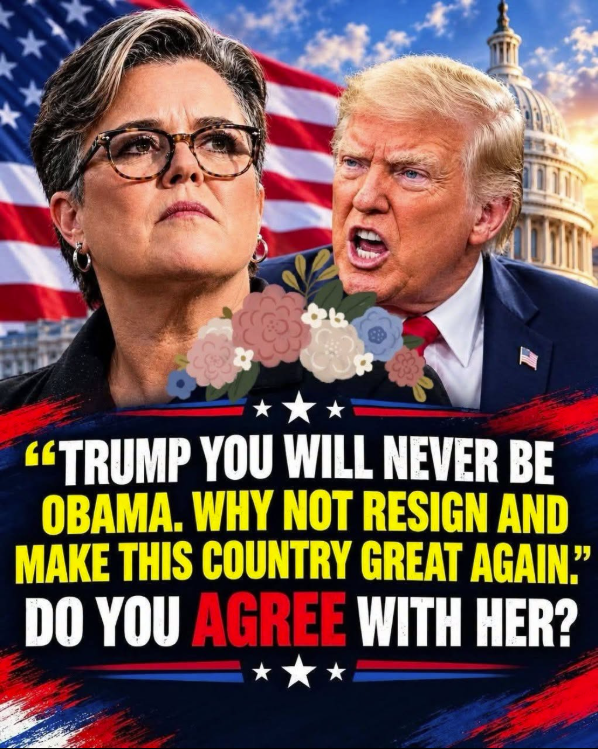
“Different opinions are part of democracy. 🇺🇸 What’s your take on this message? Let’s discuss respectfully.”
It is a simple statement, but it touches on one of the most important features of democratic life: people are allowed to disagree.
In a democracy, citizens do not have to share identical opinions about government, political parties, public policy or national priorities. In the United States, freedom of speech and the right to peaceably assemble and petition the government are expressly protected by the First Amendment. (National Archives)
That constitutional protection does not mean every political conversation will be calm or that people will always reach agreement.
Democratic societies contain competing interests, competing values and competing interpretations of public problems. The challenge is not eliminating disagreement. The challenge is finding ways to disagree without turning every difference into a personal battle.
That makes the message behind this social-media prompt worth examining.
What does it really mean to say that different opinions are part of democracy?
Why is respectful discussion difficult?
Can people disagree strongly while still listening to one another?
And what does a healthy political conversation actually look like?
These questions matter far beyond social media. They affect families, workplaces, classrooms, communities and the political system itself.
The idea that citizens can disagree is built into the structure of American government.
The Constitution created institutions with different responsibilities and established mechanisms through which competing interests could be represented and debated.
The First Amendment protects speech, the press, peaceful assembly and the right to petition the government. The National Archives describes these protections as fundamental rights contained in the Bill of Rights. (National Archives)
The existence of those protections reflects an important principle:
People can hold different views without losing their right to express them.
That does not mean every statement is protected in every circumstance. First Amendment law contains important distinctions concerning context and government regulation of speech. The Constitution Annotated, maintained by the Library of Congress, explains that the government may regulate expression in certain circumstances when it has legitimate interests and the regulation meets constitutional requirements. (Congress.gov)
But at the center of democratic debate remains the ability of people to express political ideas and challenge the decisions of those who govern them.
That ability necessarily produces disagreement.
Political disagreements often become difficult because people stop discussing ideas and begin judging the people who hold them.
Instead of asking, “Why do you support this policy?” a person may ask, “How could anyone believe that?”
That shift changes the entire conversation.
The first question invites an explanation.
The second can sound like an attack on someone's judgment or character.
Once people feel personally attacked, they may become more interested in defending themselves than considering what the other person is saying.
This does not mean people have to be emotionally detached from politics.
Political decisions affect people's lives.
People may care deeply about taxes, education, immigration, healthcare, criminal justice, foreign policy, environmental regulation, reproductive policy or the size and role of government.
Strong opinions are not inherently incompatible with respectful dialogue.
The distinction is between strong disagreement over ideas and hostility toward people.
One of the most common misunderstandings about respectful political discussion is the idea that respect requires agreement.
Two people can disagree on a policy while recognizing that the other person is sincere.
One person might favor a particular government program.
Another might believe the same program costs too much.
They can challenge assumptions.
They can question the likely consequences.
They can point out contradictions.
They can even strongly criticize the policy.
None of that necessarily requires insulting the person who holds the opposing view.
Respect can simply mean acknowledging that the person across the table has the right to participate in the conversation.
That distinction is important because democratic debate would become impossible if respectful discussion required everyone to reach the same conclusion.
People frequently disagree because they are prioritizing different concerns.
One person may place greater emphasis on individual liberty.
Another may place greater emphasis on public safety.
Someone else may prioritize government spending.
Another may prioritize access to public services.
A voter might focus heavily on foreign policy, while another may care most about local economic conditions.
When those priorities differ, disagreement can occur even when both people are responding honestly to the same information.
Understanding that can change the tone of a discussion.
Instead of assuming that an opponent simply “doesn't care,” it can be more useful to ask what principle or outcome they are prioritizing.
That does not require accepting their conclusion.
It simply makes the disagreement easier to understand.
Political arguments often become confused because factual claims and value judgments get mixed together.
“Government spending increased by a certain amount.”
“Government should spend less money.”
The first is primarily a factual claim.
The second is a policy judgment.
The factual claim can be investigated using budget documents, official statistics and other evidence.
The value judgment depends partly on beliefs about taxation, government responsibilities, debt and public priorities.
Political discussions become more productive when participants recognize the difference.
A person may agree about the facts but disagree about what should be done.
Another person may disagree about the underlying facts.
Those are two different kinds of disagreements and require different conversations.
Political issues often touch identity.
People may associate their political views with their families, communities, religion, profession, region or personal history.
When an issue becomes part of someone's identity, criticism of the issue can feel like criticism of the person.
That helps explain why relatively ordinary disagreements can become intensely personal.
Social media can make this effect even stronger.
A face-to-face conversation usually contains additional context.
They can see facial expressions.
Online, a short sentence can sound much harsher than the writer intended.
A comment written as sarcasm can be interpreted literally.
A disagreement over one policy can suddenly become an argument about everything a person supposedly believes.
The result can be an escalation that would have been unlikely in a more careful conversation.
Surveys conducted by Pew Research Center have repeatedly found that Americans have concerns about the tone of political debate.
In a 2023 survey, 84% of U.S. adults said political debate had become less respectful over the preceding several years, while 4% said it had become more respectful. A similarly large share said political debate had become less fact-based. (Pew Research Center)
Earlier research found a similar concern. In 2018, 61% of Americans said it was very important that the tone of debate among political leaders be respectful, yet only 25% said the statement “the tone of debate among political leaders is respectful” described the country very or somewhat well. (Pew Research Center)
These surveys measure public perceptions, not an objective score of political conversation.
But they do show that many Americans distinguish between the democratic ideal of debate and how political discourse is experienced in practice.
The desire for political disagreement without personal hostility is not unique to the internet age.
Throughout American history, citizens and political leaders have disagreed about fundamental questions.
The country has experienced fierce debates over taxation, federal power, slavery and abolition, labor rights, civil rights, voting rights, war and peace, the role of the courts and countless other issues.
Some disagreements became bitter.
Some led to protests and political movements.
Some required constitutional amendments and major changes in law.
The existence of intense disagreement did not automatically mean democracy had failed.
Conflict is often part of political change.
The more important question is how political systems and citizens respond to conflict.
The First Amendment's protection of political expression is central to this discussion.
The Constitution states that Congress shall make no law abridging freedom of speech or of the press and protects the right of people peaceably to assemble and petition the government. (Congress.gov)
That protection is particularly significant for political debate because criticism of government and public officials is part of democratic participation.
Citizens can advocate for change.
They can criticize laws and policies.
They can support positions that others strongly oppose.
The system does not require unanimous approval before someone is permitted to express an opinion.
The principle is not “everyone agrees.”
It is closer to “people with different views remain part of the political community.”
Respectful debate does not mean avoiding criticism.
Political leaders, policies and institutions can be criticized.
People can say that a policy is ineffective, expensive, unfair, poorly designed or inconsistent with stated goals.
They can challenge political arguments directly.
But there is a difference between saying, “I think this policy would have harmful consequences,” and making a personal attack unrelated to the policy itself.
Pew Research Center's research into acceptable political language found that Americans distinguish between different kinds of criticism. Large majorities regarded some forms of policy-focused criticism as acceptable while showing much less tolerance for personal mockery and deliberate mischaracterization. (Pew Research Center)
That distinction is useful beyond political campaigns.
It applies to everyday conversations too.
But do not assume that disagreement gives either participant a license to attack the other personally.
Another misconception is that listening to another political perspective means giving up your own beliefs.
Listening can simply mean making an effort to understand what the other person is saying before responding.
Imagine that someone presents an argument you strongly oppose.
You could immediately interrupt with your counterargument.
“What evidence led you to that conclusion?”
“What outcome are you most concerned about?”
“Which part of this issue matters most to you?”
Those questions do not communicate agreement.
And curiosity can sometimes reveal that a disagreement is narrower than it initially appeared.
Even agreement about basic facts does not guarantee agreement about policy.
Suppose two people accept the same statistics about unemployment.
One may conclude that government should increase spending.
Another may argue that regulation should be reduced.
Both can be looking at the same numbers and using different assumptions about what causes economic problems.
That is why fact-checking is important but cannot solve every political dispute.
But political decisions also involve values, trade-offs and predictions about consequences.
Those judgments are part of democratic debate.
Recognizing the role of values should not be confused with saying facts are irrelevant.
A democratic conversation depends on participants being able to distinguish evidence from rumor.
Pew's 2023 research found that 78% of Americans believed political debate had become less fact-based over the preceding several years. (Pew Research Center)
That perception points to an important challenge.
Disagreement based on competing interpretations of evidence is one thing.
Disagreement in which participants cannot agree on whether basic information is accurate is much harder to resolve.
For that reason, a respectful political conversation should make room for evidence.
Ask where a statistic came from.
Distinguish an estimate from an observed measurement.
Distinguish an allegation from an established fact.
These habits can improve the quality of disagreement even when they do not produce agreement.
Online platforms often make political conversations especially difficult.
Strong language gets reactions.
People may feel pressure to respond immediately.
A comment can be shared without its original context.
An argument can quickly become a performance for an audience rather than a conversation between two people.
This creates incentives for certainty.
Someone who writes, “I may be wrong, but here's how I understand this” may attract less attention than someone who claims to know exactly what everyone is thinking.
Yet genuine political questions are often complicated.
Some consequences are uncertain.
Acknowledging uncertainty is not necessarily weakness.
It can be a sign that a person recognizes the limits of available information.
A respectful political conversation can improve dramatically when people ask questions rather than simply make declarations.
“You don't understand anything.”
“What part of the proposal concerns you most?”
“That policy will obviously fail.”
“What evidence makes you think the policy would fail?”
“Anyone who believes that is ridiculous.”
“What do you think supporters of that position are trying to accomplish?”
But they move the discussion from identity to substance.
There are also times when the most respectful response is to stop arguing.
Not every discussion needs to continue indefinitely.
If two people have explained their positions and neither has more evidence or questions, repeating the same points may accomplish very little.
“I understand your position, even though I disagree.”
That sentence is not a surrender.
It is a recognition that political disagreement can exist without requiring endless conflict.
In families and friendships, this can be especially valuable.
Relationships usually contain more than political opinions.
A person may disagree with a relative about an election and still love them.
Two coworkers may disagree about government policy and still work effectively together.
Neighbors can hold different views while cooperating on local concerns.
A democratic society requires people to share institutions and communities even when they do not share political beliefs.
Respectful discussion does not require tolerating harassment or threats.
There is a difference between hearing an opposing opinion and enduring abuse.
Likewise, people can choose not to participate in a particular conversation.
Someone may decide that a subject is too personal.
Someone may leave a discussion that has become hostile.
Someone may mute or block accounts that repeatedly harass them.
Respect works in both directions.
A person does not have to remain in every argument simply because disagreement is part of democracy.
There is no single script, but several practical habits can help.
Start by identifying the actual issue.
Make clear what claim you are responding to.
Use evidence where factual questions are involved.
Distinguish facts from interpretations.
Avoid assuming motives without evidence.
Allow the other person to finish explaining.
Ask questions before assigning labels.
Correct factual errors without turning correction into humiliation.
Admit uncertainty when the evidence is incomplete.
And remember that changing your mind is not the only possible outcome of a conversation.
Sometimes understanding the opposing argument more clearly is the outcome.
This may be the most important lesson.
Understanding a political position does not mean endorsing it.
You can understand why someone supports a policy and still oppose that policy.
You can understand why someone distrusts an institution and still think their conclusion is mistaken.
You can recognize the historical experience behind a political movement without adopting its ideas.
The idea that different opinions belong in democracy also raises another important point.
Not every popular opinion becomes correct simply because it is popular.
Minority viewpoints can play an important role in public debate.
The First Amendment protects speech and petition regardless of whether a person's position is currently supported by a majority. (National Archives)
Over time, some ideas that were once marginal can become influential.
Other ideas can remain unpopular.
Democracy therefore cannot simply mean “the majority always gets to silence everyone else.”
It requires processes through which competing views can be expressed and debated.
There is also a danger in imagining respectful conversation as completely emotionless.
People care about politics because politics affects real lives.
A parent may feel strongly about education.
A veteran may care deeply about national security.
A small-business owner may worry about regulation and taxes.
A worker may care about wages and workplace protections.
A person who has experienced discrimination may care deeply about civil rights.
Emotion is not necessarily the enemy of reason.
The goal is not to remove emotion from politics.
The goal is to prevent emotion from becoming a substitute for evidence or a justification for abusing other people.
Political debate becomes more dangerous when people begin to believe that everyone on the other side is morally identical.
Large political groups contain millions of individuals.
They have different backgrounds.
They have different reasons for supporting the same candidate or policy.
Reducing all of them to a single stereotype can make genuine understanding almost impossible.
It also makes compromise more difficult because compromise requires recognizing the other side as part of the same political community.
You do not have to trust every political argument.
You do not have to support every politician.
You do not have to compromise on every principle.
But democratic discussion is easier when people distinguish political opposition from personal hatred.
Some of the hardest political conversations happen around the dinner table.
Families may include people of different generations and backgrounds.
Parents and children may have different political priorities.
Siblings may support different parties.
Grandparents may have entirely different experiences of politics from younger relatives.
One useful approach is to establish boundaries.
A family can agree that political discussion is welcome but personal insults are not.
People can choose whether to discuss a particular election or policy.
Someone can say, “I don't think we're going to agree, so let's change the subject.”
Those boundaries do not eliminate disagreement.
They protect the relationship while allowing differences to exist.
Political conversation can also be sensitive at work.
Colleagues often have different beliefs, and workplace hierarchies can make certain disagreements more complicated.
A supervisor and employee may have unequal power.
A customer may hold a different view.
A team may need to cooperate despite political differences.
Professional environments therefore often require greater attention to relevance, respectful conduct and organizational policies.
The underlying principle remains similar:
Disagreement about political ideas should not automatically prevent people from working together.
Educational environments have a special role because learning requires questioning.
Students may encounter ideas that conflict with what they have learned at home.
Teachers may present historical interpretations that provoke disagreement.
Classmates may hold different political beliefs.
A productive classroom does not necessarily avoid controversial subjects.
Instead, it can teach students how to evaluate evidence, ask questions, identify assumptions and distinguish argument from insult.
Those are skills that extend well beyond politics.
A respectful conversation leaves open the possibility that either participant could learn something.
That does not mean people should change their beliefs simply to appear reasonable.
It means that confidence should not become absolute certainty.
A person may discover that a statistic they relied on was outdated.
They may learn that a policy they criticized had a different provision than they realized.
They may discover that someone on the opposing side has a concern they had never considered.
Sometimes the result is a changed mind.
Sometimes it is a stronger version of the original position.
Sometimes it is simply a clearer understanding of the disagreement.
All three are possible outcomes.
The statement “Different opinions are part of democracy. What’s your take on this message? Let’s discuss respectfully.” is essentially an invitation to participate in conversation.
It does not specify a particular policy.
It does not tell readers which party to support.
It does not tell them what conclusion to reach.
Instead, it places emphasis on the process of discussion.
That makes the most interesting question not “Which side is correct?” but:
How should people behave when they disagree about important issues?
There is no single answer, but several principles emerge from constitutional protections and research on political discourse.
People have the right to express political opinions.
Personal attacks can derail substantive debate.
And respectful discussion can coexist with strong disagreement.
Respectful political debate does not require using artificial politeness.
“I think the evidence points the other way.”
“I don't find that argument convincing.”
“I think there is an important fact missing from that claim.”
They do not pretend agreement exists.
But they focus attention on the substance of the disagreement.
“People like you shouldn't be allowed to speak.”
Those statements move away from the issue and toward the person.
Democracy is not necessarily a system without conflict.
Conflict over public choices is one of the reasons political institutions exist.
Different groups have different interests.
Citizens disagree about priorities.
Governments have limited resources.
Every major political decision can produce winners, losers, supporters and opponents.
The purpose of respectful discourse is therefore not to eliminate conflict.
It is to make disagreement possible without making coexistence impossible.
That is a much more realistic goal.
Before responding to a political post, it can help to ask yourself three questions.
Am I responding to the argument, or am I reacting to the person?
Those questions can prevent a surprising number of unnecessary conflicts.
They also make it easier to spot misleading information.
If a post cannot clearly explain its claim, the disagreement may be happening around something that nobody has actually established.
Political conversations benefit from recognizing that no individual knows everything.
People can misunderstand statistics.
News reports can contain errors.
Politicians can make claims that require checking.
Policies can have unintended effects.
Events can develop in ways that were not anticipated.
Acknowledging uncertainty does not mean having no opinion.
It means recognizing that opinions operate within the limits of available information.
This is especially valuable when discussing complicated issues.
People sometimes think of democracy primarily in terms of voting.
But democratic participation is broader.
The First Amendment explicitly protects several of these forms of participation, including speech, peaceful assembly and petition. (National Archives)
That means democratic life continues between elections.
And the quality of everyday political conversation can shape how communities understand public issues.
People will continue to disagree.
The more difficult problem begins when disagreement turns into dehumanization — when people stop seeing opponents as citizens with rights and instead see them only as enemies.
That shift can make every issue feel existential.
Every compromise becomes betrayal.
Every correction becomes an attack.
Every election becomes a total judgment on the worth of another group.
That makes political life harder to navigate.
A democracy functions through disagreement, but it also depends on citizens continuing to live together after the argument is over.
The message “Different opinions are part of democracy. 🇺🇸 What’s your take on this message? Let’s discuss respectfully.” points toward a basic feature of democratic society: people are permitted to disagree.
The U.S. constitutional system protects freedom of speech and the rights of peaceful assembly and petition, providing a legal foundation for political participation and disagreement. (National Archives)
Respectful debate does not require political agreement.
It does not require pretending that every opinion is equally well supported.
It does not require abandoning strong convictions.
It means making room for disagreement while maintaining a distinction between challenging an idea and attacking a person.
Research from Pew Research Center shows that many Americans believe political debate has become less respectful and less fact-based in recent years. In 2023, 84% said the tone had become less respectful, while 78% said political debate had become less fact-based. (Pew Research Center)
Those findings do not settle how political conversations should look, but they illustrate why the subject continues to matter.
Perhaps the most useful approach is to remember that disagreement itself is not a failure.
Two people can look at the same issue and reach different conclusions.
They can question each other's reasoning.
They can defend deeply held principles.
And they can still remain part of the same democratic community.
The important habit is to keep the conversation connected to the issue.
And when an argument becomes personal, remember that winning a comment section is not the same thing as improving public understanding.
Democracy leaves room for disagreement.
The quality of that disagreement depends, in part, on what citizens do with that freedom.



0 comments:
Post a Comment