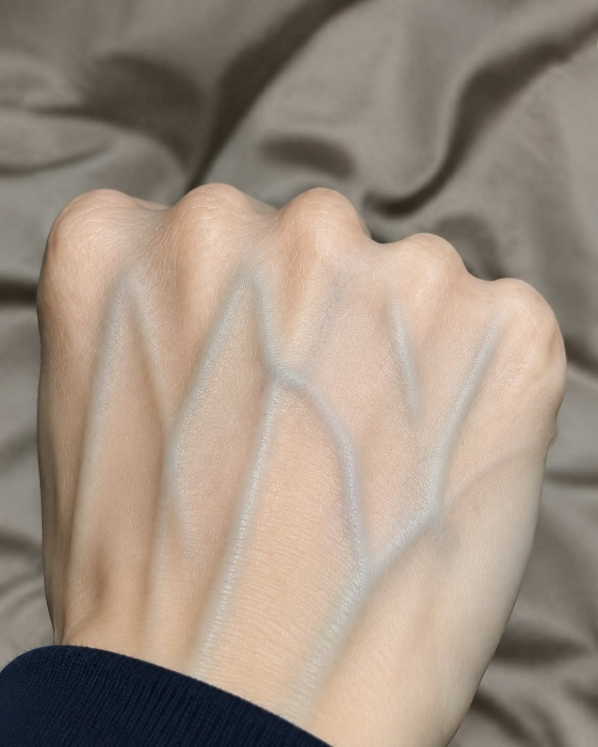
If Your Veins Are Visible, Here’s What It Means
Have you ever looked down at your arms or hands and suddenly noticed that your veins seem much more visible than usual?
Maybe they're prominent across your forearms, standing out on the backs of your hands, or appearing beneath the skin of your legs. For some people, visible veins are simply a normal feature of their body. For others, they can seem to appear unexpectedly and raise an obvious question:
In most cases, visible veins are not automatically a sign of illness. Veins naturally sit beneath the skin and become easier to see depending on factors such as genetics, skin thickness, body composition, temperature, physical activity and age.
However, there are situations in which newly prominent veins—particularly when accompanied by pain, swelling, redness or other changes—deserve medical attention.
Understanding the difference can help you know when there's nothing to worry about and when it's worth talking with a healthcare professional.
Why Are Some People's Veins More Visible?
The simplest explanation is anatomy.
Veins carry blood back toward the heart and are located at different depths beneath the skin. Some are relatively close to the surface, which makes them easier to see.
Genetics play an important role. If visible veins run in your family, you may naturally have veins that are closer to the skin's surface or have a skin and body composition that makes them more noticeable.
Skin tone and thickness also matter. Thinner or lighter-colored skin can make blood vessels easier to see, although people of every skin tone can have prominent veins.
Body composition is another factor.
People with relatively little fat beneath the skin may have more visible veins because there is less tissue between the skin and superficial veins. This is one reason athletes and people who are very lean may notice prominent veins, particularly in their arms.
That doesn't necessarily mean that visible veins indicate exceptional fitness, however. They can simply reflect anatomy.
If you've ever noticed your veins becoming much more prominent during or immediately after exercise, there's usually a straightforward explanation.
When you exercise, your muscles need more oxygen and nutrients. Blood flow increases, and blood vessels respond to the changing demands of your body.
During strength training in particular, muscles temporarily swell with increased blood flow. This can push superficial veins closer to the skin and make them appear larger.
When your body gets hot, blood vessels near the skin can widen as part of the body's effort to release heat. As a result, veins may become more noticeable.
That's why someone can look at their forearms after a workout and see veins that weren't nearly as obvious earlier in the day.
Hot Weather Can Make Veins More Visible
Temperature is one of the simplest explanations for suddenly prominent veins.
When you're warm, blood vessels near the surface of the skin can dilate. This increases blood flow toward the skin, helping your body release excess heat.
As those vessels become more prominent, superficial veins may be easier to see.
You may therefore notice more visible veins during:
Other situations that raise body temperature
Once your body cools down, the appearance may become less pronounced.
This is generally a normal physiological response.
Another common reason veins become more visible is a reduction in body fat.
Subcutaneous fat sits between the skin and deeper structures, including some superficial veins. When body fat decreases, there may be less tissue covering those veins.
This can make them appear more prominent.
That doesn't necessarily mean that anything is wrong. In fact, someone who loses weight gradually may simply notice anatomical features that were previously less visible.
However, unexplained or rapid weight loss is different.
If you've lost a significant amount of weight without intentionally changing your diet or activity level, it's worth discussing with a healthcare professional rather than assuming that more visible veins explain the change.
Aging Can Change the Appearance of Your Veins
Visible veins can also become more common with age.
As we get older, skin tends to become thinner and loses some of its elasticity and underlying support. Subcutaneous tissue can also change.
These changes may make veins that were always present easier to see.
The backs of the hands are a particularly common place for this to become noticeable.
Many people become concerned when they suddenly notice prominent veins on their hands, but in an otherwise healthy person, this can simply be part of normal aging.
When Visible Veins May Indicate Varicose Veins
Not all prominent veins are the same.
Varicose veins are enlarged, twisted veins that most commonly appear in the legs. They occur when valves inside veins don't work effectively, allowing blood to pool and increasing pressure within the veins.
They can look blue, purple or skin-colored and may bulge beneath the surface.
Some people with varicose veins have no symptoms. Others experience:
Aching or heaviness in the legs
Throbbing or burning sensations
Symptoms that become worse after prolonged standing
Varicose veins are common, but persistent symptoms should be discussed with a healthcare professional.
Treatment isn't always necessary simply because a vein is visible. If symptoms are present, however, a clinician can evaluate the veins and discuss appropriate options.
You may also notice tiny red, blue or purple vessels forming web-like patterns on the skin.
These are commonly called spider veins.
Unlike large varicose veins, spider veins are usually small and close to the surface. They often appear on the legs or face.
They're generally considered a cosmetic concern, although their appearance can sometimes accompany underlying venous problems.
If you're uncertain whether what you're seeing is a spider vein, a normal superficial vein or something else, a healthcare professional can help identify it.
Visible veins by themselves are usually not an emergency.
The situation becomes more concerning when a vein becomes suddenly prominent and you develop other symptoms.
Pay particular attention to signs such as:
A vein that feels hard or unusually firm
Sudden changes affecting only one side of the body
Shortness of breath or chest pain
A painful, swollen limb with warmth or redness can sometimes indicate a blood clot, including deep vein thrombosis (DVT), which requires prompt medical evaluation.
If leg or arm swelling occurs together with sudden unexplained shortness of breath, chest pain, coughing up blood or fainting, seek emergency medical attention.
These symptoms should never be dismissed as simply having “visible veins.”
Do Visible Veins Mean You're Dehydrated?
This is a common question, particularly after exercise.
Dehydration can change the appearance of the skin and blood vessels, but visible veins alone are not a reliable way to diagnose dehydration.
After intense exercise, several factors can occur simultaneously: increased blood flow, elevated body temperature, sweating and changes in fluid balance.
Rather than judging hydration solely by how prominent your veins look, pay attention to more established signs such as thirst, dark urine, reduced urination, dizziness or unusual fatigue.
Severe dehydration can be dangerous and requires appropriate medical attention.
Can Stress Make Your Veins More Visible?
Stress can cause a variety of temporary physical changes, including changes in heart rate, blood pressure and circulation.
However, visible veins shouldn't automatically be attributed to stress.
If you notice a vein becoming prominent during a stressful moment and it disappears afterward, the change may simply reflect temporary physiological changes. But persistent or unusual changes deserve consideration on their own rather than being blamed on anxiety.
Can You Make Visible Veins Disappear?
If your visible veins are simply a normal part of your anatomy, there may be no medical reason to eliminate them.
For people who are bothered by varicose or spider veins, treatments are available.
Depending on the type and severity of the veins, healthcare professionals may recommend approaches such as compression therapy, sclerotherapy, laser treatment or other procedures.
The appropriate treatment depends on what's causing the visible veins.
It's generally not a good idea to use supplements, creams or unproven home remedies advertised as ways to “hide” or eliminate veins without understanding the underlying issue.
A visible vein isn't necessarily a problem that needs to be fixed.
What About Veins That Suddenly Appear?
A sudden change is worth paying attention to—but not necessarily panicking over.
Think about what changed recently.
Have you started exercising more?
Have temperatures become significantly hotter?
Have you changed your activity level?
Have you been standing for long periods?
Have you noticed the veins primarily after workouts?
These details can provide useful context.
A vein that becomes prominent during exercise and returns to its usual appearance afterward is very different from a newly enlarged, painful vein accompanied by swelling.
The appearance of your veins is influenced by a combination of genetics, age, body composition, temperature and activity.
For many people, visible veins are simply a normal part of their anatomy. They can become more obvious after exercise, in hot weather, following weight loss or as the skin changes with age.
The key is to pay attention to changes and accompanying symptoms, rather than treating visibility itself as a warning sign.
A vein that has always been visible and causes no symptoms is generally much less concerning than one that suddenly changes and becomes painful or swollen.
And if you're uncertain, there's nothing wrong with asking a healthcare professional to take a look.
Visible veins don't automatically mean that you're unhealthy, dehydrated or getting older faster than you should.
Sometimes they simply mean that your veins are close to the surface.
Exercise, heat, lower body fat and normal changes in the skin can all make them easier to see. Varicose veins and other vein conditions are additional possibilities, particularly when visible veins are accompanied by discomfort, swelling or changes in the skin.
The most important distinction is between normal visibility and a new, symptomatic change.
So the next time you notice prominent veins on your hands, arms or legs, don't immediately assume the worst. Look at the bigger picture.
If they're symmetrical, longstanding and painless, they're likely just part of your normal anatomy.
If they're new, painful, swollen, warm, red or associated with breathing difficulties or chest pain, that's a different situation—and one that deserves prompt medical attention.
Your veins are part of a remarkably complex circulatory system. Seeing them isn't necessarily a warning.
Sometimes, it's simply a reminder that they're there.
This article is for general educational purposes and isn't a diagnosis. Persistent or concerning changes should be evaluated by a qualified healthcare professional.


0 comments:
Post a Comment