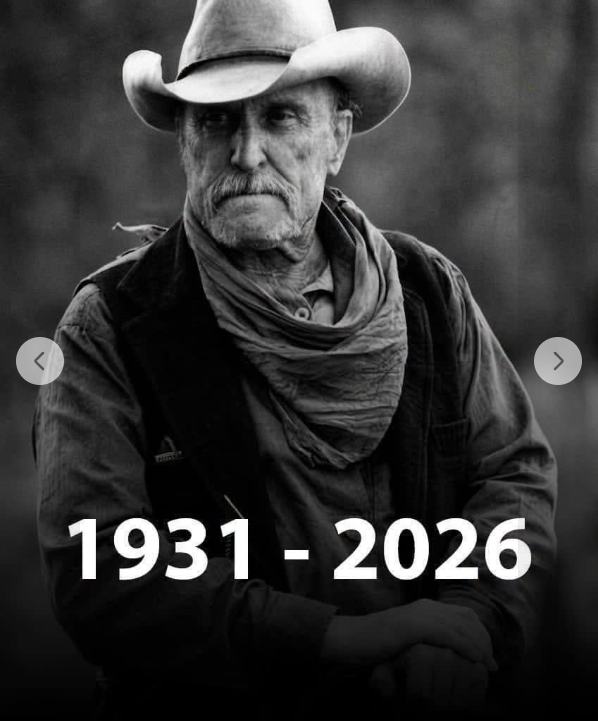
The world of cinema has lost one of its most distinctive and beloved performers.
Sir Sam Neill, the acclaimed New Zealand actor whose remarkable career stretched across more than five decades, died in Sydney on July 13, 2026. He was 78.
For millions of moviegoers, Neill will forever be Dr. Alan Grant, the paleontologist who stood in awe before living dinosaurs in Steven Spielberg's Jurassic Park. But that unforgettable performance represented only one chapter of an extraordinary career.
Neill was equally at home in intimate dramas, psychological thrillers, television miniseries, horror films, comedies, independent cinema and major Hollywood productions. He could play a quiet, thoughtful everyman one year and a frightening villain the next.
His family confirmed his death in a statement shared on social media, describing his passing as sudden and unexpected and saying that he was surrounded by family in Sydney. They also noted that Neill had remained cancer-free after his earlier battle with a rare form of blood cancer.
The news sent shock waves through the international entertainment community.
Steven Spielberg, Nicole Kidman, Cillian Murphy, Jeff Goldblum, Laura Dern and many other colleagues paid tribute to the actor, remembering not only his extraordinary talent but also his kindness, humor, intelligence and warmth.
Yet perhaps the most fitting way to remember Sam Neill is not simply as a Hollywood star.
He was an actor who never seemed interested in behaving like one.
Sam Neill was born Nigel John Dermot Neill in Omagh, Northern Ireland, in 1947.
When he was seven years old, his family moved to New Zealand, where he would eventually discover the world that shaped his life.
Neill's early years were not an obvious blueprint for international stardom.
He studied at school in Christchurch and later attended university. Acting gradually became more than an extracurricular interest. It became a means of expression and eventually a profession.
According to accounts of his life, Neill had struggled with a stutter as a child and discovered that it became less pronounced when he was performing.
That experience helped make acting more than simply a career choice.
It became a place where he could communicate with confidence.
He eventually adopted the name Sam, abandoning his first name Nigel.
It was one of the many small decisions that would help create the personality audiences eventually came to know.
Before Hollywood knew his name, Sam Neill was already helping establish himself as one of New Zealand's most important screen actors.
His breakthrough came with Sleeping Dogs in 1977.
The film was important not only for Neill's career but also for New Zealand cinema.
It helped demonstrate that New Zealand filmmakers could produce ambitious, serious films capable of attracting international attention.
Neill quickly followed with My Brilliant Career in 1979, starring opposite Judy Davis.
The performance expanded his reputation beyond New Zealand and Australia and demonstrated something that would become one of the defining characteristics of his career:
Neill was difficult to categorize.
He was handsome enough to be a traditional leading man.
But there was always something slightly unusual about his presence.
His performances contained restraint.
He could communicate uncertainty without explaining it.
He could appear intimidating without raising his voice.
He could also bring humor to characters who might otherwise have seemed severe.
That subtlety became his trademark.
When an actor becomes associated with an enormously successful movie franchise, it can be difficult to escape that character.
Of course, Dr. Alan Grant became his most recognizable role.
But years before audiences saw him surrounded by dinosaurs, Neill had already built a substantial body of work.
He appeared in The Final Conflict, Possession, Dead Calm, The Hunt for Red October, The Piano, Merlin, The Tudors, Peaky Blinders and many other productions.
The breadth of those performances is remarkable.
He could move from historical drama to horror.
From psychological thriller to science fiction.
From television drama to family entertainment.
From art-house cinema to blockbuster filmmaking.
That versatility is one of the reasons his death feels like the loss of an entire era rather than simply the loss of a single famous actor.
In 1993, Sam Neill entered movie history.
Steven Spielberg's Jurassic Park introduced audiences to Dr. Alan Grant, a paleontologist whose skepticism and scientific knowledge are tested when dinosaurs are brought back to life.
The movie became a worldwide phenomenon.
Its visual effects changed blockbuster filmmaking.
Its dinosaurs became cultural icons.
And its human characters became inseparable from the film's success.
Neill's performance was central to that equation.
Alan Grant was not written as a traditional action hero.
He was uncomfortable with children.
He was fascinated by prehistoric life but deeply disturbed by the idea of turning extinct animals into attractions.
And when everything went wrong, he was forced to become a protector.
Neill played the character with restraint rather than exaggerated heroics.
He reacted to the impossible the way a real person might react.
When he first sees a living dinosaur, the wonder on his face is not theatrical.
That authenticity helped make Jurassic Park endure.
There is something especially memorable about Sam Neill's performance as Alan Grant.
The character is often surrounded by enormous spectacle.
The visual effects dominate the screen.
Yet Neill never allows the spectacle to overwhelm the human story.
He gives Grant emotional grounding.
The character begins the movie as someone who would rather study fossils than deal with children.
By the end, he has become a protector and surrogate father figure.
Neill never turns it into a sentimental performance.
Instead, the audience watches the character change through small moments.
That was one of Neill's great strengths.
He did not need to explain everything.
Following Neill's death, Steven Spielberg paid tribute to the actor and emphasized the qualities that made him special.
Spielberg described Neill as exceptionally collaborative and recalled that playing Alan Grant was something of a stretch for him because Neill himself was a loving father, while Grant initially behaved as though children were unpleasant.
Spielberg also said that he adored making the Jurassic films with Neill and that he would never be forgotten.
Great actors are not remembered only for what audiences see on screen.
They are also remembered by colleagues for what it was like to work with them.
In Neill's case, the recollections repeatedly emphasized generosity, humor and professionalism.
That reputation may ultimately be as important as his filmography.
The same year that Jurassic Park arrived, another important Sam Neill performance appeared in theaters.
Jane Campion's The Piano was almost the opposite of Spielberg's dinosaur adventure.
Where Jurassic Park was enormous and spectacular, The Piano was intimate, psychological and emotionally intense.
Neill played Alisdair Stewart, a landowner in 19th-century New Zealand.
The role required him to communicate emotional repression and cruelty through restraint.
And yet Neill gave the performance the complexity necessary to prevent the character from becoming a simple villain.
The contrast between The Piano and Jurassic Park demonstrates the extraordinary range of the actor.
In one movie, he was a paleontologist running from a Tyrannosaurus rex.
In the other, he was a deeply troubled man trapped within an unhappy marriage.
Both performances came in the same year.
That is an extraordinary achievement.
Another important entry in Neill's filmography was Dead Calm, the 1989 psychological thriller in which he starred alongside Nicole Kidman and Billy Zane.
The film helped establish Neill as an actor capable of creating tension without relying on conventional action-hero techniques.
His screen presence could be calm and threatening at the same time.
That quality followed him throughout his career.
Even when he played sympathetic characters, there was often a sense that something deeper was happening beneath the surface.
It made audiences want to keep watching.
Neill also appeared in The Hunt for Red October, the acclaimed submarine thriller starring Sean Connery and Alec Baldwin.
The film introduced him to another enormous international audience.
Again, Neill was not necessarily the loudest or most flamboyant performer in the production.
But he had a way of making supporting characters memorable.
That became a recurring theme throughout his career.
Neill did not always need to be the center of attention.
He could strengthen an entire production simply by being present.
Neill's talents were not limited to cinema.
He built an impressive television career as well.
He starred in productions such as Reilly, Ace of Spies, Merlin, The Tudors and Peaky Blinders.
For a new generation, his role as Major Chester Campbell in Peaky Blinders introduced him to viewers who might have known him primarily as Alan Grant.
The series allowed him to embrace a darker side.
His performance was intimidating, controlled and authoritative.
Once again, he demonstrated that he was not dependent on one type of character.
He could enter a completely different world and make it his own.
Despite achieving international fame, Sam Neill never abandoned his connection to New Zealand.
That may be one of the most important aspects of his legacy.
He continued to appear in New Zealand productions.
He supported the country's film industry.
And he remained closely connected to his homeland throughout his career.
In Hunt for the Wilderpeople, he played Hector Faulkner, a gruff New Zealand bushman.
The film became a major success and was another reminder that Neill could return to local cinema even after becoming a global star.
His career therefore moved in two directions simultaneously.
There was something refreshing about Sam Neill.
He did not seem consumed by celebrity.
And he had a famously dry sense of humor.
His social media presence often showed a playful side that contrasted with the serious characters he frequently played.
He could be intimidating on screen and mischievous away from it.
That combination helped explain why colleagues repeatedly described him as kind and funny.
He did not appear to take his own fame too seriously.
Neill was also a successful winemaker.
He founded Two Paddocks, a vineyard in Central Otago, New Zealand.
The winery became an important part of his life and identity.
It was another example of Neill's desire to remain connected to the land and to New Zealand.
He was not simply an actor living between movie sets.
He had another world waiting for him.
A world of vineyards, animals, family and rural life.
That contrast makes his career particularly interesting.
The man audiences knew as a Hollywood star was also someone who valued ordinary pleasures.
In 2022, Neill revealed that he had been diagnosed with stage-three angioimmunoblastic T-cell lymphoma, a rare form of blood cancer.
The diagnosis became public while he was promoting his memoir, Did I Ever Tell You This?
Neill spoke openly about the experience.
He did not hide the seriousness of the disease.
Later, he revealed that he was cancer-free after treatment.
His family said that he remained free of cancer when he died.
That makes the news of his death particularly poignant.
Fans who had celebrated his recovery naturally hoped that he would have many more years.
Instead, his death came suddenly and unexpectedly.
According to later reporting from The Hollywood Reporter Australia, Neill died from complications related to pneumonia after his immune system had been severely compromised by treatment for blood cancer.
Neill's openness about illness added another dimension to his public legacy.
Celebrities are often expected to present an image of invincibility.
He wrote about his experiences.
His memoir gave audiences a glimpse into the person behind the roles.
It also showed the humor that had always been part of his personality.
Even when discussing difficult subjects, Neill could find a way to remain human.
After news of his death became public, tributes poured in from across the entertainment world.
Nicole Kidman, who worked with Neill on Dead Calm, described him as one of the greats.
Cillian Murphy, who worked with him on Peaky Blinders, remembered him as kind, funny and gentle.
Jeff Goldblum also paid tribute to his longtime Jurassic Park colleague.
Director Colin Trevorrow described Neill as a deeply soulful and beautiful man and expressed gratitude for having known him.
These tributes shared a common theme.
They were not merely about fame.
Neill's connection with Laura Dern and Jeff Goldblum became particularly meaningful over the years.
The three actors first appeared together in Jurassic Park.
Decades later, they reunited for Jurassic World Dominion in 2022.
Their friendship had grown beyond the original film.
Following Neill's death, footage of the three of them singing together circulated online, offering fans a bittersweet reminder that their connection extended beyond the screen.
For audiences who grew up with Jurassic Park, seeing Neill, Dern and Goldblum together again was deeply emotional.
They represented a particular moment in movie history.
And Neill's passing means that moment now belongs even more firmly to the past.
A much smaller number become part of the cultural memory of several generations.
A child watching Jurassic Park in the 1990s could know him as Dr. Alan Grant.
A television viewer decades later could discover him through Peaky Blinders.
A fan of New Zealand cinema could know him from Sleeping Dogs, My Brilliant Career or Hunt for the Wilderpeople.
A lover of classic psychological thrillers could remember Dead Calm.
A fan of serious drama could point to The Piano.
That is the definition of a lasting actor.
His career did not depend on one audience.
Neill appeared in more than 150 movies and television productions over his career, according to the Washington Post.
That number alone tells the story.
He was not an actor who appeared briefly and disappeared.
He participated in blockbusters.
He continued working late into his life.
And through it all, he remained recognizable without becoming repetitive.
Perhaps one of the most important lessons from Neill's career is the power of restraint.
Modern movie acting can sometimes emphasize enormous emotions.
He could communicate fear with a look.
That ability made him especially effective in films where the audience needed to believe the character.
Dr. Alan Grant works because Sam Neill never appears to be performing “being amazed.”
The tributes following Neill's death repeatedly described him as warm, generous, intelligent and funny.
Film history is full of talented people.
But audiences tend to remember the performers who made them feel something.
Neill did that without demanding attention.
He could dominate a scene quietly.
He could disappear into a character.
And he could make audiences feel that the person on screen existed beyond the frame.
The phrase “Hollywood icon” is used frequently.
Sometimes it is used too easily.
Not because he spent his life chasing fame.
Not because he appeared in only the biggest movies.
And not because he was constantly in the headlines.
He earned it because his work endured.
His performances continued to be discovered by new audiences.
And his influence stretched across different kinds of cinema.
He helped bring New Zealand filmmaking to international audiences while becoming a global star himself.
Some fans will remember Alan Grant standing beneath a Brachiosaurus.
Others will remember his performance in The Piano.
Some will remember Major Campbell in Peaky Blinders.
Others will remember the darker roles from earlier in his career.
Still others will remember the humor of his memoir or his social media posts featuring his beloved animals.
And some will simply remember his voice, his eyes and his unmistakable screen presence.
There is no single way to remember Sam Neill.
That is part of what made his career so special.
Cinema asks actors to make audiences believe in things that do not exist.
But the best actors make the audience forget that they are watching fiction.
When Dr. Alan Grant looked at a dinosaur, audiences believed that he was seeing something impossible for the first time.
When he played a troubled husband in The Piano, audiences believed in the emotional world of the character.
When he appeared in Dead Calm, audiences felt the danger.
When he played Major Campbell, audiences felt the threat.
It would be easy to define Sam Neill by Jurassic Park.
There is nothing wrong with that.
The film changed cinema, and his performance became iconic.
But doing so would overlook the remarkable career surrounding it.
Neill was already an established actor before Spielberg cast him.
He continued working for more than three decades afterward.
He earned respect in television, independent film, international cinema and Hollywood.
He became a mentor and friend to younger actors.
And he remained connected to the country that helped shape him.
The world has indeed lost a true Hollywood icon.
But Sam Neill's story is not really a story about Hollywood.
It is a story about a boy who moved from Northern Ireland to New Zealand, discovered acting, overcame personal obstacles, built a career, crossed international borders, and became one of the most recognizable actors of his generation.
It is a story about someone who could stand beside dinosaurs and make audiences believe.
It is a story about an actor who could move effortlessly between blockbuster entertainment and serious drama.
It is a story about a man who never seemed to forget where he came from.
And it is a story about a performer whose greatest achievement may have been his ability to make every character feel human.
Sam Neill died in Sydney at 78, surrounded by family. His career had lasted more than five decades and included more than 150 screen credits.
He leaves behind four children and eight grandchildren, along with generations of fans who will continue to discover his work.
And somewhere, whenever Jurassic Park begins and that unforgettable first dinosaur appears, an entire generation will once again see Sam Neill's Dr. Alan Grant looking upward in astonishment.
That moment will never grow old.
Neither will the actor who made it unforgettable.


0 comments:
Post a Comment