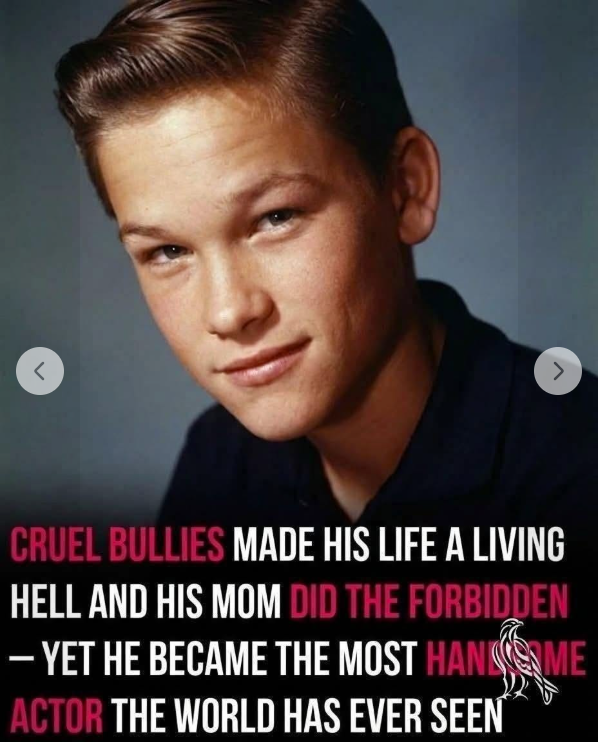
The handsome young man in the viral guessing game was Patrick Swayze, the Texas-born actor, dancer and singer whose career turned him into one of the defining stars of the 1980s and 1990s.
The clues are unusually revealing.
He was born in 1952. He grew up in Houston in a family deeply connected to dance and the arts. As a boy, he was taunted and physically bullied because he studied ballet and theater. He later endured devastating personal losses, including the death of his older sister Vicky in 1994. He also struggled with alcohol during difficult periods of his adult life.
Yet none of those hardships erased the ambition that had been visible from an early age.
Instead, Swayze built a career that crossed boundaries. He was a dancer who became an actor, a television performer who became a movie star, a romantic leading man who could also play tough action roles, and a celebrity who remained closely connected to the stage.
For millions of people, however, his name will forever be associated with two characters: Johnny Castle in Dirty Dancing and Sam Wheat in Ghost.
His story was not simply one of fame.
It was a story of persistence, grief, addiction, recovery, reinvention and extraordinary determination.
Patrick Wayne Swayze was born on August 18, 1952, in Houston, Texas.
His mother, Patsy Swayze, was a highly influential dance teacher and choreographer. His father, Jesse Wayne “Buddy” Swayze, worked in engineering and had a background that included boxing and ranching. Patrick was raised alongside his siblings in what the Texas State Historical Association describes as an “arts family.”
Dance was not something Patrick discovered after becoming famous.
It was part of his life from childhood.
His mother operated a dance studio, and Patrick began training when he was very young. His environment gave him access to ballet, choreography and performance at a time when his classmates were developing very different ideas about what boys should be doing.
That difference would become a source of trouble.
Swayze's interest in dance and theater made him a target for taunting and physical abuse from other children. The Texas State Historical Association notes that he was beaten and teased because of his interests.
Biography.com likewise reports that Swayze was frequently teased by classmates because he studied ballet.
The experience could easily have pushed him away from dance.
Instead, it became part of the story of how he developed his determination.
One of the most striking details about Swayze's childhood is how sharply his early ambitions conflicted with expectations about masculinity.
In Houston, he was not simply the athletic boy who happened to dance.
He was a boy carrying dance shoes and a violin.
His brother Don later recalled an incident in which other boys mocked Patrick as a “pretty boy” because of his dancing. According to a later Biography.com account, Patsy encouraged her son to stand up for himself, and Patrick ultimately confronted the boys in a boxing gym.
The story has become part of the mythology surrounding Swayze because it captures something essential about his personality.
He refused to accept the idea that athleticism and dance were opposites.
At school he participated in swimming, diving, gymnastics, track and football. He also studied martial arts. The Texas State Historical Association records that he became known as a tough athlete even while continuing to carry the signs of his artistic training.
This combination later became central to his screen image.
Patrick Swayze could move like a dancer and fight like an action star.
He could appear physically imposing while performing emotionally vulnerable characters.
That duality helped make him so recognizable.
Swayze's teenage years were defined by an unusual combination of disciplines.
He was not simply preparing for an acting career.
He was developing a physical vocabulary that would later become enormously valuable in film.
His athletic background helped him perform demanding physical scenes, while his dance training gave him an elegance and precision that distinguished him from many conventional action stars.
He attended San Jacinto College in Houston on a gymnastics scholarship but eventually left college to pursue performing. He toured with Disney on Parade, playing Prince Charming, before moving to New York to continue his training.
In New York, he studied at the Harkness and Joffrey ballet schools and joined the Eliot Feld Ballet.
His path, however, was repeatedly interrupted by injuries.
A knee injury connected to his football years affected his prospects as a professional dancer. That setback encouraged him to move increasingly toward theater and acting.
It was another example of a door closing without ending his career.
He simply found another entrance.
Long before audiences knew him as Johnny Castle, Swayze had to prove himself on stage.
He became a replacement Danny Zuko in the Broadway production of Grease in 1978.
That experience mattered because musical theater combined the skills he had been developing since childhood.
And he was increasingly learning how to command a large audience.
Hollywood opportunities followed.
His early screen work was not immediately spectacular. He appeared in films and television projects while continuing to build his reputation.
His breakthrough came gradually rather than overnight.
Swayze appeared in Francis Ford Coppola's 1983 film The Outsiders, alongside a remarkable group of young actors who would also become major Hollywood names, including Tom Cruise, Rob Lowe, Matt Dillon and others.
The movie introduced audiences to Swayze as a serious dramatic performer.
His career continued to develop through television roles, including the miniseries North and South, which brought him wider attention.
But his defining transformation was still ahead.
It arrived in a dance movie that almost became something entirely different.
Released in 1987, Dirty Dancing transformed Patrick Swayze into an international star.
He played Johnny Castle, a dance instructor at a summer resort who becomes romantically involved with Frances “Baby” Houseman, played by Jennifer Grey.
The film combined romance, music, dance, class differences and coming-of-age themes.
But its success depended heavily on Swayze's unusual combination of physicality and emotional sensitivity.
Johnny was strong and confident, but he was not simply an action hero.
He was a working-class character confronting a world divided by money and social status.
Swayze's own dance background made the role uniquely suited to him.
The Guardian later described Dirty Dancing as the breakthrough that played directly to his strengths, while noting that the film became a huge success through theatrical release and home video.
The movie became one of those rare films that escaped its original era.
Decades later, people still knew the music.
They still knew the dance scenes.
They still knew Johnny Castle's name.
And they still recognized Swayze's image instantly.
Swayze's involvement with Dirty Dancing went beyond acting and dancing.
He also co-wrote and recorded “She's Like the Wind,” a song included on the movie's soundtrack.
The song became strongly associated with the film and added another dimension to his public image.
He was no longer merely an actor who could dance.
He was being presented as a performer capable of music as well.
That versatility would remain a defining part of his career.
Rather than becoming permanently identified with romantic films, Swayze moved in a different direction.
In 1989, he starred in Road House as Dalton, a professional “cooler” hired to restore order at a violent bar.
The film became a cult favorite.
It showcased an entirely different Swayze.
There was little of Johnny Castle's romantic softness.
Instead, Dalton was controlled, physically formidable and capable of serious violence when necessary.
The role helped establish that his success in Dirty Dancing had not been a one-time event.
He could carry action films, too.
Swayze starred opposite Demi Moore as Sam Wheat, a man who dies unexpectedly but remains connected to the woman he loves.
The film combined romance, fantasy, suspense and supernatural elements.
Its famous pottery scene became one of the most recognizable romantic sequences in modern movie history.
But the movie's success depended on something more than a memorable scene.
Swayze had to make the audience believe in a relationship that continued after death.
That required emotional restraint.
His performance helped make Ghost a major success and further established him as a leading man capable of playing both physical and deeply emotional roles. The Guardian and Washington Post both highlighted Ghost as one of the key works of his career.
After the film, People magazine selected him for its “Sexiest People Alive” distinction, reflecting his status as a major celebrity of the era.
In 1991, Swayze appeared in Kathryn Bigelow's Point Break as Bodhi, a charismatic surfer and bank robber.
The character was almost the opposite of Johnny Castle.
Bodhi was philosophical, rebellious and dangerous.
Swayze's performance turned him into an unforgettable antagonist, even though the character was magnetic enough that audiences could understand why others followed him.
The film also demonstrated Swayze's willingness to perform physically demanding scenes.
His athletic training had followed him from childhood into his professional life.
That physical confidence became an important part of his action roles.
From the outside, Swayze appeared to have everything.
He had starred in blockbuster films.
He was married to Lisa Niemi, his childhood sweetheart, whom he met when she was a student at his mother's dance studio. They married in 1975 and remained together until his death.
But celebrity did not eliminate his personal struggles.
Swayze had a serious problem with alcohol at various points in his adult life.
His drinking became particularly difficult after painful personal losses and periods of professional disappointment.
The Los Angeles Times reported that his drinking problem recurred and that he struggled with depression after the deaths of his father and his sister Vicki, as well as the loss of several friends.
The Guardian likewise reported that the death of his sister had a profound effect on him and that he repeatedly relapsed into alcoholism.
These struggles complicate the image of the perfectly confident movie star.
Behind the public persona was someone dealing with grief and addiction.
One of the most painful events of Swayze's life occurred in 1994, when his older sister Vicky died by suicide.
Recent coverage of the Swayze family confirms that Vicky had been a dancer and choreographer and that her death deeply affected Patrick.
The Los Angeles Times reported that Vicky's death became part of a devastating period for Swayze, whose drinking and emotional struggles intensified.
For someone who had grown up alongside his siblings and shared a love of dance with Vicky, the loss was enormous.
Grief does not follow a straight line.
Swayze's experience illustrates how someone can appear outwardly successful while privately struggling with an experience that has profoundly changed their life.
Swayze eventually entered rehabilitation.
The Independent reported that the death of Vicky helped prompt him to try to regain control of his life, and he spent time at a rehabilitation clinic.
He also retreated from Hollywood for periods, spending time at ranch properties in California and New Mexico.
Life away from the Hollywood spotlight gave him room to focus on other interests, including Arabian horses and his ranches.
That period represented a different kind of success.
For an actor who had spent years in the center of public attention, stepping away could have been interpreted as a retreat.
But it was also a chance to regain balance.
In 1996, while working on the HBO movie Letters from a Killer, Swayze suffered a serious horseback-riding accident.
The Guardian reported that he broke both legs, while other accounts described the right femur as having been badly fractured.
For an actor whose career and identity had been built partly around athleticism and physical performance, this was a major setback.
Yet again, Swayze had to rebuild.
Many stars who reach the height of fame struggle to remain relevant when the culture changes.
Swayze's career moved through different phases.
He appeared in films such as To Wong Foo, Thanks for Everything! Julie Newmar, where he played Vida Boheme, a drag performer.
He appeared in Donnie Darko in 2001 as the unsettling motivational speaker Jim Cunningham.
That role was especially interesting because it allowed him to turn away from the image that had made him famous.
He was no longer trying to play Johnny Castle.
He was demonstrating that there were other possibilities.
The Guardian noted that Donnie Darko helped create another phase of his career, giving him an opportunity to show a different side of his acting.
Despite becoming an international movie star, Swayze never abandoned theater.
In 2003, he appeared in the touring production of Chicago.
In 2006, he returned to London's West End in a revival of Guys and Dolls, playing Nathan Detroit.
The Guardian noted that his performance connected strongly with London audiences.
That return to live performance was important.
The stage had been part of Swayze's identity long before Hollywood discovered him.
It was the place where acting, dancing and music could once again exist together.
One of the quieter aspects of Swayze's biography was the longevity of his relationship with Lisa Niemi.
They met when they were young at his mother's dance studio and married in 1975. They remained together for more than three decades.
Their relationship survived extraordinary pressures.
They experienced professional success.
They dealt with addiction and recovery.
They lived through injuries and illness.
And eventually, Lisa was beside him through his final illness.
Swayze once described marriage as requiring friendship and continued effort, a view that reflected the importance he placed on their relationship. Biography.com reports that the couple remained close throughout their lives together.
In early 2008, Swayze was diagnosed with pancreatic cancer.
The diagnosis came at a moment when he was still actively working.
Rather than immediately disappearing from public life, he continued filming The Beast, an A&E television series in which he played FBI agent Charles Barker.
He underwent chemotherapy and other treatment while working.
His determination during this period drew enormous public attention.
At a time when many people expected a famous actor with a serious cancer diagnosis to withdraw from the spotlight, Swayze continued performing.
He completed the first season of The Beast and continued working on film projects.
Swayze's final period was intensely personal.
He had become famous at a time when celebrity culture worked differently from today.
Although photographs and reports about his illness were widely circulated, he continued to focus on his work.
His last film was Powder Blue, released in 2009.
His final television role was in The Beast.
That work became part of the legacy he left behind.
Even while undergoing treatment, he continued to do what he had been doing since childhood:
Patrick Swayze died on September 14, 2009, in Los Angeles.
The cause of death was pancreatic cancer. His wife Lisa survived him.
His death represented the end of a relatively short life that nevertheless contained an extraordinary number of chapters.
Each identity became part of the larger story.
Swayze's appeal was never based entirely on his appearance.
His looks certainly contributed to his status as a leading man, but his lasting reputation rests on something broader.
He could perform physically demanding scenes.
He could also portray characters with darker edges.
That versatility helped him survive changes in Hollywood fashion.
When the romantic leading-man era changed, he could appear in action films.
When audiences began rediscovering older movies, his best-known performances became cultural touchstones.
And when younger generations discovered Dirty Dancing and Ghost, they encountered an actor whose work had outlived the period in which he became famous.
The childhood bullying mentioned in the viral clue may seem like a small detail compared with his later fame.
It is actually one of the most revealing parts of his story.
Swayze was mocked because he danced.
Years later, dance became one of the most recognizable elements of his screen identity.
The very activity that had made him a target helped make him famous.
That transformation is powerful because it shows how easily society can misunderstand young people.
Something that looks unusual in childhood can become a defining strength in adulthood.
Swayze did not stop dancing because other people told him he should.
His alcohol problems also deserve careful consideration.
Addiction is not a sign that someone lacks talent, fame or determination.
Swayze's career demonstrates that personal struggles can coexist with enormous professional success.
He experienced periods in which drinking interfered with his life and work.
He stepped away from Hollywood.
That does not mean recovery is simple or permanent for every person.
It does demonstrate that asking for help can be part of rebuilding a life.
It is easy to reduce Patrick Swayze to a single image.
But that represents only one part of his life.
There was also Dalton in Road House.
Jim Cunningham in Donnie Darko.
Nathan Detroit on the West End.
And behind all those performances was the dancer from Houston who had once been mocked for doing ballet.
Perhaps the clearest thread running through Swayze's biography is reinvention.
When football injuries interfered with dancing, he turned toward theater.
When stage work led him toward acting, film became the next destination.
When Dirty Dancing made him famous as a romantic star, he moved into action.
When personal struggles threatened his career, he sought help and stepped away.
When injuries damaged his body, he returned.
When Hollywood offered fewer conventional leading roles, he took character parts.
When cancer threatened his health, he kept working.
There is no single moment that explains his career.
It was the accumulation of these decisions.
The viral question asks readers to identify a handsome young man born in 1952 whose life included bullying, family tragedy, alcoholism and extraordinary Hollywood success.
But perhaps the more interesting part of the story is what happened between those clues.
He was born into a dance family and initially faced ridicule for doing something he loved.
He transformed his physical abilities into a career.
He became a stage performer before becoming a movie star.
He reached international fame through Dirty Dancing and Ghost.
He demonstrated his range in Road House, Point Break, To Wong Foo and Donnie Darko.
He faced devastating grief following the death of his sister Vicky.
He struggled with alcohol and eventually sought rehabilitation.
He continued to work even after receiving a pancreatic cancer diagnosis.
And he remained devoted to his wife Lisa Niemi, whom he had married decades earlier.
Patrick Swayze died in 2009, but his screen image has proved remarkably durable.
People continue to discover Dirty Dancing.
They continue to revisit Road House.
They continue to debate his most memorable performance.
And younger audiences who were not alive when he became famous still recognize his face.
That is one of the clearest measures of a movie star's cultural legacy.
But his enduring appeal comes from something more personal as well.
Swayze's life contained both triumph and vulnerability.
He was successful and troubled.
He was physically strong yet experienced injuries that could have ended his career.
And despite all of it, he kept returning to the work.
The answer to the viral mystery is Patrick Swayze.
Born in Houston on August 18, 1952, he grew up surrounded by dance, athletics and performance. His love of dance made him a target for bullying, but he refused to abandon it. His training eventually helped create the physical and artistic style that made him famous.
He became a star through Dirty Dancing, then expanded his career with Ghost, Road House, Point Break, To Wong Foo, Donnie Darko and numerous television and stage appearances.
Away from the spotlight, however, his life contained profound struggles.
The death of his sister Vicky in 1994 deeply affected him, and he battled alcohol during painful periods of his life before seeking treatment and stepping away from Hollywood for a time.
Later, a serious horseback-riding accident caused major injuries, but he returned to work.
Then, in 2008, he was diagnosed with pancreatic cancer.
Even during treatment, he continued acting.
He died on September 14, 2009, at the age of 57.
His life cannot be reduced to the handsome young face seen in old photographs.
It was the story of a boy who was mocked for dancing and grew into a man whose dancing helped define his fame.
It was the story of someone who experienced enormous grief but continued searching for meaning.
And it was the story of an actor whose performances became part of popular culture long after his death.
For many fans, Patrick Swayze will always be Johnny Castle walking onto the dance floor.
But behind that unforgettable image was a much more complicated human story — one of struggle, resilience, family, love, loss and an enduring commitment to his craft.
That is why, decades after his greatest films first reached theaters, Patrick Swayze remains so difficult to forget.


0 comments:
Post a Comment