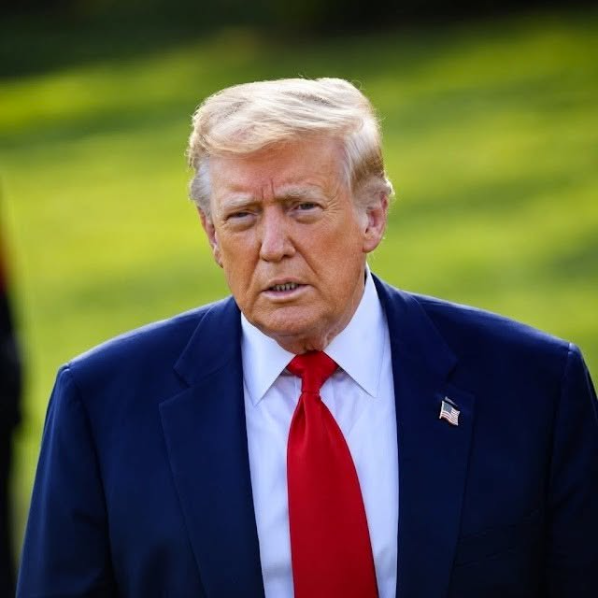
Social media is filled with dramatic headlines designed to grab attention. One of the latest examples reads:
"Trump Just Signed a Major Law — 'Up To 2 Years In Prison if You…'"
At first glance, the headline appears alarming. It suggests that President Donald Trump has signed a sweeping new law that could send ordinary Americans to prison for simply doing something online. However, like many viral social media posts, this headline leaves out critical information.
When readers see a statement ending with "See more," curiosity often leads them to assume the worst before they have the opportunity to examine the facts. Unfortunately, incomplete headlines have become increasingly common across social media platforms because they generate clicks, comments, and shares.
This article examines whether the claim is true or false, explains what the law actually says, explores why it was passed, and discusses the latest verified developments related to the legislation.
The goal is not to defend or criticize any political figure but to separate verified facts from misleading online narratives.
The viral headline is misleading, not because it invents the existence of a new law, but because it omits the most important detail.
President Donald Trump did sign the TAKE IT DOWN Act into law in May 2025. The law includes criminal penalties that can reach up to two years in prison for certain offenses.
However, those penalties do not apply to ordinary internet users for everyday online activity.
Instead, they apply to individuals who knowingly publish or threaten to publish non-consensual intimate images, including sexually explicit AI-generated "deepfake" images, under specific circumstances defined by federal law.
Without explaining that context, the viral headline gives many readers the mistaken impression that Americans could receive prison sentences for routine social media posts or expressing opinions online.
The TAKE IT DOWN Act is federal legislation intended to combat one of the fastest-growing forms of online abuse:
As artificial intelligence has improved dramatically, experts have warned that creating fake explicit images of real people has become easier than ever.
Many victims have discovered manipulated explicit images of themselves circulating online despite never posing for such photographs.
The emotional, professional, and psychological damage can be severe.
Congress responded by creating legislation designed to criminalize intentional distribution of these images while also requiring many online platforms to remove qualifying content after receiving valid requests.
Lawmakers from both political parties argued that existing laws had not kept pace with modern technology.
Before recent advances in artificial intelligence, most revenge-porn cases involved authentic photographs that someone shared without permission.
Today, AI software allows nearly anyone to generate convincing fake intimate images using publicly available photographs.
A single image taken from Facebook, Instagram, LinkedIn, or another website can sometimes be manipulated into realistic-looking fake explicit content.
Supporters of the legislation argued that stronger federal protections had become necessary because state laws varied widely, leaving many victims without effective legal remedies.
This is where many viral headlines become misleading.
The law does not say that people can be imprisoned simply for using social media.
Instead, criminal penalties generally apply to people who knowingly engage in prohibited conduct involving intimate images without consent.
Whether criminal liability exists depends on the specific facts of each case, and prosecutors must still prove the required elements under the law.
In other words, the law targets specific harmful behavior rather than ordinary online speech.
Social media algorithms reward curiosity.
"Congress Creates Federal Protections Against Non-Consensual AI Deepfake Images"
would likely receive far fewer clicks than:
"Trump Just Signed a Major Law — Up To 2 Years In Prison if You…"
The second version creates suspense.
Readers naturally want to know:
Unfortunately, many users share such posts without reading the full article.
This contributes to widespread confusion.
Supporters of the TAKE IT DOWN Act describe it as an important step toward protecting victims in the digital age.
Many victim advocacy organizations have said that non-consensual intimate imagery can have life-changing consequences, particularly for young people and women.
Supporters also note that once explicit material spreads online, removing every copy becomes extremely difficult, making rapid response especially important.
Although the law received bipartisan support, some digital rights and civil liberties organizations have raised concerns about how it may be implemented.
Among the issues discussed publicly are:
These concerns do not necessarily mean the law is unconstitutional. Rather, they reflect ongoing debates about how to protect victims while preserving due process and freedom of expression.
When evaluating viral political claims, it is important to distinguish between what a law actually says and how it is presented online.
Fact: President Donald Trump signed the TAKE IT DOWN Act into law.
Fact: The law includes criminal penalties that can reach up to two years in prison for certain offenses.
Fact: The legislation targets the knowing publication of non-consensual intimate images, including many AI-generated sexually explicit deepfakes.
False Impression: The law broadly sends ordinary Americans to prison for unspecified everyday online behavior.
That last impression is what makes the viral headline misleading. By omitting the nature of the prohibited conduct, it encourages readers to draw conclusions that are not supported by the law itself.
In the next section, we will examine the TAKE IT DOWN Act in greater detail, including:


0 comments:
Post a Comment