Top Ad 728x90

Sunday, October 25, 2026

OMG Huge thanks to whoever suggested

OMG Huge thanks to whoever suggested

by
OMG Huge thanks to whoever suggested

This luscious no-bake dessert combines a smooth, creamy layer made with cream cheese and sweetened condensed milk with a rich chocolate topping. The result is a beautifully creamy, indulgent treat with a soft texture and deep chocolate flavor.

It’s simple enough to prepare ahead of time and elegant enough to serve at family gatherings, dinner parties, holidays, or whenever you want an impressive dessert without turning on the oven.

2 cups heavy cream, well chilled

1 can (14 oz) sweetened condensed milk

8 oz cream cheese, softened to room temperature

1½ cups semi-sweet chocolate chips

Crushed biscuits or graham crackers, enough to cover the bottom of your serving dish

A little melted butter, if desired, to help bind the crumbs together

Place the softened cream cheese in a large mixing bowl.

Using an electric hand mixer or stand mixer, beat the cream cheese on medium speed until it becomes completely smooth and creamy. Take a moment to scrape down the sides of the bowl as needed so there are no large lumps remaining.

Add the sweetened condensed milk and vanilla extract to the cream cheese.

Continue mixing until everything is thoroughly combined and the mixture is smooth, creamy, and slightly thickened.

Tip: Using softened cream cheese is important. Cold cream cheese can leave small lumps in the finished mixture.

Pour the chilled heavy cream into a separate clean mixing bowl.

Using clean beaters, whip the cream on medium-high speed until soft peaks form. When you lift the beaters, the cream should hold a soft peak that gently bends over.

Be careful not to overwhip the cream. You want it fluffy and airy rather than thick and grainy.

Add the whipped cream to the cream cheese mixture.

Using a rubber spatula, gently fold the whipped cream into the cream cheese mixture. Work slowly and carefully, lifting the mixture from the bottom and folding it over the top.

Avoid vigorous stirring, as this can knock the air out of the whipped cream and make the dessert heavier.

Continue folding until the mixture is evenly combined and has a light, fluffy consistency.

Transfer the cream mixture to a glass serving dish.

Use a spatula or the back of a spoon to spread it into an even layer. Smooth the surface as much as possible because this will become the base for the chocolate topping.

Place the dish in the refrigerator and chill for approximately 30 minutes.

This short chilling period helps the cream layer firm up before you add the warm chocolate mixture.

While the cream layer is chilling, prepare the chocolate topping.

Place the semi-sweet chocolate chips in a heatproof bowl.

Pour the ¾ cup heavy cream into a small saucepan and heat it over medium-low heat until it is hot and steaming. Do not allow the cream to come to a full boil.

Once the cream is hot, carefully pour it over the chocolate chips.

Leave the mixture undisturbed for about 2 minutes. This gives the hot cream time to soften and melt the chocolate.

After 2 minutes, slowly stir the mixture with a spatula or whisk. Continue stirring until the chocolate has completely melted and the mixture becomes smooth, glossy, and creamy.

Remove the chilled cream layer from the refrigerator.

Allow the chocolate mixture to cool slightly if it is very hot. You don't want to pour extremely hot chocolate directly onto the delicate cream layer.

Slowly pour the chocolate mixture over the top.

Use a spatula to gently spread the chocolate into an even layer, covering the cream completely.

Work gently so that you don't disturb or mix the two layers together.

Cover the serving dish and return it to the refrigerator.

Refrigerate for at least 4 hours, or preferably overnight, until the dessert is thoroughly chilled and the chocolate layer has set.

The longer chilling time allows the cream layer to firm up and makes the dessert much easier to slice.

Once completely chilled and set, remove the dessert from the refrigerator.

Using a sharp knife, cut it into squares or rectangles.

For cleaner slices, wipe the knife with a warm, slightly damp cloth between cuts.

Serve the squares chilled and enjoy the contrast between the soft, creamy filling and the rich chocolate topping.

For an extra layer of texture, turn this dessert into a cookie-bottomed treat.

Crush biscuits or graham crackers into fine crumbs. If desired, combine the crumbs with a small amount of melted butter until they resemble damp sand.

Press the mixture firmly into the bottom of your glass serving dish to form an even crust.

Chill the crust for a few minutes before adding the cream layer, then continue with the recipe as written.

A cookie crust adds a pleasant crunch and makes the dessert even more substantial.

Soften the cream cheese: Let it sit at room temperature before mixing for a smoother cream layer.

Keep the heavy cream cold: Cold cream generally whips more easily and holds its shape better.

Don't overwhip: Stop whipping when soft peaks form. Overwhipped cream can become grainy.

Fold gently: Folding preserves the air in the whipped cream and keeps the dessert light.

Cool the chocolate slightly: Very hot ganache can soften the cream layer, so let it cool briefly before pouring.

Give it enough time to chill: Four hours is the minimum recommended chilling time, but leaving it overnight produces an especially firm and easy-to-slice dessert.

Use a glass dish: A clear serving dish makes the contrasting cream and chocolate layers especially attractive.

This dessert is ideal for making ahead.

You can prepare it up to one day in advance, cover it tightly, and keep it refrigerated until you're ready to serve. In fact, making it the night before can give the layers plenty of time to fully set.

Keep the dessert covered and refrigerated.

It will stay fresh for approximately 4 days when properly stored in the refrigerator.

Because this dessert contains heavy cream and cream cheese, it should remain chilled and should not be left at room temperature for extended periods.

Yes! This is a great make-ahead dessert. Prepare it a day in advance, cover it, and refrigerate until ready to serve.

Store the dessert covered in the refrigerator for up to 4 days.

Absolutely. A crushed biscuit or graham cracker crust works beautifully with the creamy filling and chocolate topping. You can also experiment with different types of cookies for a slightly different flavor.

Yes. Milk chocolate will make the chocolate layer sweeter and creamier, while semi-sweet chocolate provides a more balanced chocolate flavor.

The chocolate topping needs time to cool and set in the refrigerator. Make sure the dessert is chilled for at least 4 hours before slicing. Overnight chilling can help produce cleaner, firmer slices.

For an extra-special presentation, top each chilled square with a small swirl of whipped cream, a sprinkle of chocolate shavings, or a few chocolate curls just before serving.

Serve cold for the best texture—the creamy layer should be smooth and soft, while the chocolate topping should be rich and firm enough to slice neatly.

The Ring You Pick Will Reveal

The Ring You Pick Will Reveal

by
The Ring You Pick Will Reveal

Choose one of the nine purple gemstone rings and discover the personality trait associated with your selection. Each ring represents a different quality, such as dependability, peace, confidence, leadership, independence, or ambition.

The idea is simple: look at all nine designs and notice which ring immediately catches your attention. Once you make your choice, you can read the description connected to that particular gemstone.

Some rings represent calm and dependable personalities, suggesting people others can trust and rely on. Others symbolize peace and harmony, reflecting individuals who value balance and prefer avoiding unnecessary conflict.

For the most enjoyable result, trust your first reaction instead of spending too much time analyzing every design. Sometimes the ring you instinctively choose can reveal something interesting about your preferences.

Most importantly, remember that this is only a playful personality quiz. The descriptions are intended for entertainment, not as a serious psychological assessment. There is no right or wrong choice.

So take a moment to examine the nine purple gemstones, choose the one that stands out to you most, and then discover the personality trait associated with your selection. Enjoy the result and see whether it feels like you.

What do you see in the

What do you see in the

by
What do you see in the

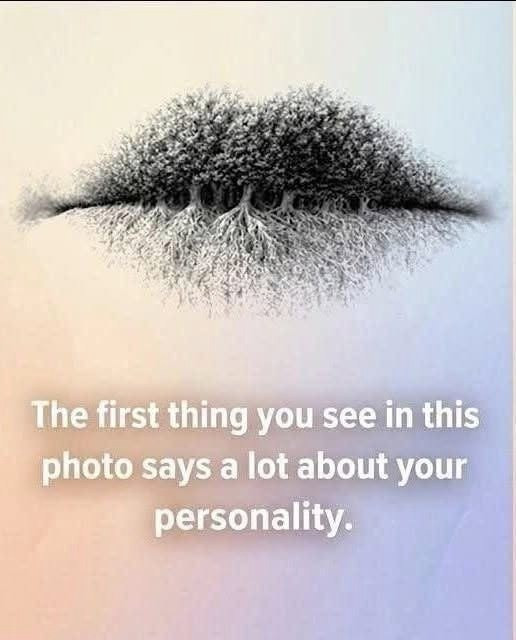
At first glance, the image appears simple and familiar. Many people look at it and assume they understand what they are seeing right away. Yet when you slow down and notice what your eyes focus on first, the picture may reveal something interesting about how your mind processes information.

Some viewers immediately notice a pair of lips. Others focus on the outline of trees rising upward. A smaller number of people identify the roots hidden deeper within the design. None of these observations are incorrect. The intriguing part lies in the speed with which your brain chooses one element over the others.

This type of visual puzzle is not a formal psychological test. It does not diagnose personality traits or predict behavior with scientific accuracy. Instead, it serves as a playful way to explore how perception and personal tendencies sometimes intersect.

Human brains process enormous amounts of visual information every second. In order to keep up with this constant stream, the mind filters details and highlights what seems most relevant. Past experiences, mood, environment, and attention patterns all influence what stands out first.

Optical illusions capture attention for this very reason. They demonstrate that two people can observe the same image while noticing completely different details. Each viewer interprets the visual signals according to their own mental patterns.

Internet culture has offered several well-known examples of this phenomenon. Debates about the color of a dress or the shade of a sneaker once spread across social media. Millions of viewers examined identical photos, yet their conclusions varied widely.

These differences do not mean that one person is correct while another is mistaken. Instead, they illustrate how perception works. The brain builds meaning from the information it receives, and that process is shaped by individual perspective.

Images that contain multiple interpretations encourage people to trust their first instinct. When you look at a picture like this, your attention naturally settles on the feature that feels most prominent.

If the first shape you recognized was the lips, your perception may lean toward balance and clarity. Rounded shapes and smooth outlines often attract the attention of people who value harmony in their environment. Individuals who notice these forms first are sometimes described as calm, practical, and steady during everyday challenges.

People with this tendency often communicate in clear, straightforward ways. Friends and family members may rely on them when situations become stressful. Their presence can bring reassurance during moments that feel uncertain.

However, maintaining that sense of stability for others sometimes leads these individuals to overlook their own needs. Remembering to create space for personal rest and reflection can help maintain balance.

If your eyes moved immediately toward the trees, your attention may naturally focus outward. Vertical shapes that rise above the surrounding image often attract people who are energetic and socially aware.

Individuals who see the trees first frequently enjoy interaction, discussion, and collaboration. They notice the environment around them quickly and may feel energized when connecting with others. Curiosity and expressiveness often accompany this pattern of observation.

Those who respond strongly to bold shapes may also appreciate new experiences and creative opportunities. They tend to adapt easily to dynamic situations and enjoy exploring ideas with friends or colleagues.

Another possibility involves noticing the roots hidden within the design before anything else. Roots require a closer look, which means your attention may lean toward deeper layers of meaning.

People who identify these subtle elements often value reflection and thoughtful conversation. They may enjoy examining ideas carefully rather than reacting quickly. Hidden details capture their curiosity, and they often seek understanding beneath the surface of everyday situations.

This pattern of perception can reflect patience and analytical thinking. Conversations with such individuals often move beyond quick conclusions and explore broader context.

It is important to remember that no single interpretation defines a personality. Visual perception can shift depending on mood, lighting, or even how long someone studies an image.

These playful exercises serve as reminders of how diverse human perception can be. A single picture can inspire several viewpoints, each shaped by individual attention patterns.

In daily life, similar differences appear during conversations, creative projects, and problem-solving situations. One person might focus on practical details, another on relationships, and another on underlying patterns.

Observing how people interpret the same information offers a glimpse into the complexity of human thinking. It shows that perception is not fixed. It evolves through experience, environment, and curiosity.

A simple image can become an invitation to pause and reflect on how our minds work. In that moment, we recognize that everyone brings a unique perspective to the world around them.

And sometimes, a picture that looks ordinary at first glance turns out to reveal something fascinating about the way we see.

Which melon would you choose There

Which melon would you choose There

by
Which melon would you choose There

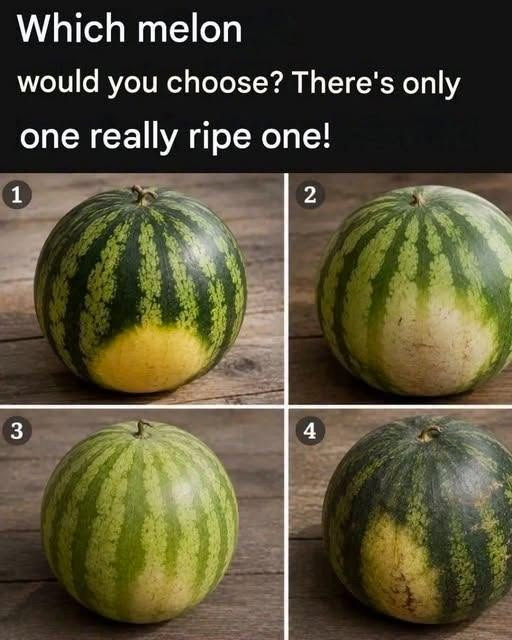
Melon 1The first melon has a dark green skin with nice contrasting stripes and a pleasant creamy yellow ground spot. Its shape is regular, and the stem is starting to dry out a little, which is usually a good sign. Based on this, it was most likely picked at the right time.

This is the best choice of the four. All its important characteristics indicate that it should be sweet, juicy and ripe inside. If you could only take one home, this would probably be the best choice.

Melon 2The second melon has a very large ground spot and is more light than creamy yellow. Its skin is not as nice either, it is slightly paler, which may indicate that it has not yet reached the perfect level of ripeness. This may still make it edible, but the flavor will probably be less intense than that of melon 1.

If you come across a melon like this in the store, it is worth checking to see if there is a better specimen next to it. It’s not a bad choice, but it certainly wouldn’t be the first of the four.

The third melon has a lighter skin, less vibrant stripes than the others, and a less intense yellow ground patch. These signs often indicate that the melon is still a bit immature. In such cases, the inside may be less sweet and crunchy, so it’s best to skip them.

It’s not necessarily a bad fruit, but it probably won’t offer the flavor you expect from a really good watermelon. If there’s another option, it’s better to choose it in stores.

Melon 4The fourth melon is dark in color, but there are already several small bruises and brown spots on the skin. These don’t mean that the inside is bad, but they are a sign that the quality is not the best. The surface is less uniform than the first melon.

If that’s all it was, it could still be good, but the damage means there’s a higher chance it won’t be perfect inside either. The safe choice is still the No. 1 melon, which best matches the characteristics of a ripe watermelon.

Saturday, October 24, 2026

TRUMP STUNNED Supreme Court rules 8

TRUMP STUNNED Supreme Court rules 8

by
TRUMP STUNNED Supreme Court rules 8

The U.S. Supreme Court on Tuesday delivered a landmark victory for American companies and constitutional limits on judicial power.

The nation’s highest court ruled 6-3 in Cisco Systems, Inc. v. Doe

(24-856) that neither the Alien Tort Statute (ATS) nor the Torture Victim Protection Act (TVPA) allows private plaintiffs to sue for aiding and abetting alleged violations of international law.

The ruling bolsters the Trump administration’s America First agenda by restoring proper roles: Congress and the executive handle foreign policy and create remedies when needed, while courts stick to enforcing enacted law.

It protects U.S. technological leadership, deters forum-shopping by overseas claimants, and reaffirms that the Constitution does not empower judges to conduct foreign relations through private lawsuits.In an age of global competition and aggressive adversaries like Communist China, this is a commonsense defense of American sovereignty and enterprise.

The decision slams the door on expansive, judge-made lawsuits that have long threatened U.S. businesses operating abroad.

Justice Amy Coney Barrett authored the majority opinion, joined by Chief Justice John Roberts and Justices Clarence Thomas, Samuel Alito, Neil Gorsuch, and Brett Kavanaugh.

“Today, we close the door that Sosa cracked and hold that courts may not create new causes of action for violations of international norms,” Barrett wrote.

“We also hold that the Torture Victim Protection Act of 1991, which contains an express cause of action, does not provide for aiding-and-abetting liability,” Barrett added.

The case involved claims by unnamed Falun Gong practitioners alleging Cisco Systems and its executives aided Chinese government persecution by selling networking equipment used in surveillance.

The Ninth Circuit had allowed the claims to proceed, but the Supreme Court reversed.

The Trump administration strongly supported taking the case and backed Cisco.

The Solicitor General participated in oral argument, urging the Court to reject judicial overreach that exposes American firms to unpredictable foreign-policy litigation.This aligned with the administration’s goals of protecting U.S. innovation, preventing lawfare

against American companies, and avoiding judicial interference in foreign relations best handled by the executive and legislative branches.

Barrett emphasized separation of powers: “The power to create causes of action belongs to Congress… Creating any cause of action ‘is an extraordinary act that places great stress on the separation of powers.’”

She noted the ATS is jurisdictional only and warned against courts inventing liability that risks “adverse foreign policy consequences.”

Justice Thomas, in prior related writings referenced by the majority, reinforced originalist limits.

Justice Alito has similarly stressed caution against race- or group-based standards bleeding into other doctrines, though here the focus remained textual and structural.

Justice Ketanji Brown Jackson concurred in part and dissented in part, joined by Justice Elena Kagan.

These are the consequences of sleeping

These are the consequences of sleeping

by
These are the consequences of sleeping

The headline “These are the consequences of sleeping with the… See more” is incomplete, so it's impossible to know exactly what object or habit it refers to. Many viral posts use this format for topics such as sleeping with your phone nearby, sleeping with the television on, sleeping with lights on, or sleeping in certain positions.

To help, here's a 1,500-word blog post based on a common health topic: sleeping with your phone next to your bed.

For many people, the last thing they see before falling asleep is their smartphone. Whether checking social media, responding to messages, watching videos, or setting an alarm, phones have become a constant companion—even in bed.

In fact, millions of people sleep with their phones on the nightstand, under their pillow, or within arm's reach every night. While this habit may seem harmless, researchers and sleep experts have increasingly raised concerns about the impact that smartphones can have on sleep quality, mental well-being, and overall health.

The issue isn't necessarily the phone itself. Instead, it's how we use it, when we use it, and the effects it can have on our bodies and minds during the hours when we should be resting.

Let's explore the consequences of sleeping with your phone nearby and why many experts recommend creating a healthier nighttime routine.

Smartphones have evolved into much more than communication devices.

Today they serve as:

Alarm clocks

Entertainment centers

News sources

Cameras

Calendars

Navigation tools

Work devices

Because they perform so many functions, many people feel uncomfortable being separated from them.

Some individuals keep their phones nearby in case of emergencies. Others simply enjoy scrolling through content before sleep. For many, sleeping near a phone has become such a routine habit that they rarely think about it.

However, convenience sometimes comes at a cost.

One of the most widely discussed concerns involves blue light exposure.

Smartphone screens emit blue light, which can interfere with the body's natural production of melatonin.

Melatonin is a hormone that helps regulate sleep and wake cycles. Under normal conditions, melatonin levels begin rising in the evening, signaling to the body that it is time to prepare for sleep.

When you stare at a bright screen before bedtime, your brain may interpret that light as a sign that it is still daytime.

As a result:

Melatonin production may be delayed.

Falling asleep may take longer.

Sleep quality may decrease.

Morning fatigue may increase.

Even a short period of screen exposure before bed can affect some individuals more than they realize.

Sleep requires the brain to gradually slow down.

Unfortunately, smartphones often have the opposite effect.

Consider what many people do before bed:

Read news headlines

Watch videos

Check work emails

Browse social media

Engage in online discussions

These activities can stimulate the brain and make relaxation more difficult.

Instead of preparing for rest, the mind remains active and engaged.

Many people who intend to spend five minutes checking their phone end up spending an hour scrolling through content.

This delay can significantly reduce total sleep time.

While smartphones connect us to information and other people, they can also expose us to stress.

Late-night exposure to:

Negative news

Social media arguments

Work-related messages

Financial concerns

Disturbing content

can elevate stress levels before bedtime.

Stress activates the body's alert systems, making it harder to relax and fall asleep.

Research has shown that excessive nighttime phone use is associated with higher levels of anxiety and poorer sleep quality in many individuals.

The issue is not simply the device itself but the emotional content it delivers.

Even after falling asleep, your phone may continue affecting your rest.

Notifications can disrupt sleep through:

Vibrations

Sounds

Bright screen alerts

Incoming calls

Message previews

In some cases, people do not fully wake up but experience partial sleep disruptions that reduce sleep quality.

The result may be waking up feeling tired despite spending enough hours in bed.

Sleep experts often emphasize that uninterrupted sleep is just as important as total sleep duration.

Many people instinctively reach for their phones the moment they wake up.

When a phone is within reach, it becomes tempting to check:

Messages

Emails

Social media

News updates

before even getting out of bed.

This habit can create a cycle in which the phone becomes the first and last thing a person interacts with each day.

Over time, this pattern may contribute to increased stress, distraction, and dependence on digital stimulation.

Smartphones can also affect personal relationships.

When partners bring phones into bed, attention may shift away from meaningful interaction.

Instead of talking, relaxing together, or winding down as a couple, each person may become absorbed in their own digital world.

Relationship experts often encourage device-free periods before sleep to strengthen communication and connection.

Even small changes can improve quality time and create healthier bedtime habits.

One of the clearest consequences of nighttime phone use is simply going to bed later.

Many people underestimate how much time they spend on their devices.

What begins as a quick glance at notifications often turns into:

Watching videos

Reading articles

Shopping online

Scrolling through social feeds

Minutes quickly become hours.

Chronic sleep deprivation has been linked to numerous health concerns, including:

Reduced concentration

Memory problems

Mood changes

Lower productivity

Increased accident risk

Protecting sleep duration is essential for long-term well-being.

When sleep quality declines, the effects extend beyond feeling tired.

Consistently poor sleep may influence:

Sleep helps support the body's natural defenses.

Memory, learning, and decision-making all depend on adequate rest.

Poor sleep can increase irritability and emotional sensitivity.

Insufficient sleep often results in daytime fatigue and reduced motivation.

Sleep plays a critical role in maintaining physical and mental health.

While occasional late-night phone use is unlikely to cause serious harm, long-term habits can gradually contribute to broader health challenges.

One question frequently asked is whether simply having a phone nearby is dangerous.

Current scientific evidence does not show that keeping a smartphone on a nearby nightstand causes major health problems through ordinary use.

However, safety concerns can arise in certain situations.

For example:

Phones placed under pillows may overheat.

Damaged charging cables can pose risks.

Charging devices in bed may increase fire hazards.

Manufacturers generally recommend using approved chargers and keeping devices in well-ventilated areas.

The greater concern for most people remains sleep disruption rather than the physical presence of the phone itself.

The good news is that improving sleep habits does not require giving up technology completely.

Small adjustments can make a significant difference.

Try stopping phone use 30 to 60 minutes before bedtime.

Many devices offer settings that reduce blue light exposure.

Activating "Do Not Disturb" mode can prevent unnecessary interruptions.

Keeping the device farther away reduces temptation.

Many people find traditional reading more relaxing before sleep.

Going to bed and waking up at similar times supports healthy sleep patterns.

For some individuals, nighttime phone use becomes difficult to control.

Signs may include:

Losing track of time while scrolling

Feeling anxious without the phone nearby

Frequently sacrificing sleep to stay online

Checking notifications throughout the night

Recognizing these patterns is the first step toward creating healthier boundaries.

Technology is a valuable tool, but it should support well-being rather than interfere with it.

Modern life makes complete separation from technology unrealistic for many people.

Phones help us stay connected, informed, and productive.

The goal is not necessarily to eliminate smartphone use but to develop a healthier relationship with it.

By being mindful of how and when we use our devices, we can enjoy their benefits without sacrificing one of the most important aspects of health: quality sleep.

Sleeping with your phone next to you may seem like a harmless habit, but it can influence sleep quality in surprising ways. From blue light exposure and mental stimulation to nighttime interruptions and reduced sleep duration, smartphones can quietly affect the body's ability to rest and recover.

The good news is that even small changes—such as limiting screen time before bed, silencing notifications, and keeping the phone farther away—can improve sleep and overall well-being.

In a world where technology is always within reach, protecting your sleep may be one of the most valuable investments you can make in your health. Sometimes the simplest step toward better rest is putting the phone down and allowing your mind the opportunity to truly switch off for the night.

If you tell me what comes after “sleeping with the…”, I can write a more specific 1,500-word blog post on that exact topic.

Father k lls family just because

Father k lls family just because

by
Father k lls family just because

It pops up on your social media feed at 11:00 PM—a dark, grainy thumbnail image of police tape outside a suburban home, accompanied by a headline written in jagged, censor-evading text:

"BREAKING: Father k!lls family just because they did is… See more"

Your thumb hesitates. The sentence makes barely any grammatical sense, yet the combination of raw tragedy, intentional misspellings (k!lls), and an abrupt cliffhanger triggers an immediate psychological jolt.

You tap the grey "...See More" button—or click the attached link—expecting a legitimate breaking news update about an ongoing criminal investigation. Instead, you are shuttled through a chaotic maze of ad-cluttered blog pages, auto-refreshing video pop-ups, malware survey traps, or an AI-generated article that rambles endlessly without ever finishing the sentence.

This specific headline template isn't just an annoying internet nuisance; it represents a lucrative, multi-million-dollar digital ecosystem built around morbid engagement farming, ad arbitrage, and the monetization of human tragedy.

Here is an in-depth breakdown of how morbid clickbait operates, the real criminological reality of family annihilation cases, why human psychology falls for these tragic hooks, and how to protect your digital safety from predatory content networks.

To understand why headlines like "Father k!lls family just because they did is..." saturate feeds across Facebook, X (formerly Twitter), and ad-discovery networks, one must look at the mechanical design behind the text.

Major social media platforms employ automated moderation filters designed to downrank or demonetize content containing graphic violence, murder, or death. Content farms bypass these safety filters by substituting symbols or numbers for letters (k!lls, m*rder, f@mily). This tricks content-scanning algorithms while remaining instantly readable to human users.

The weird, incomplete phrasing—"just because they did is..."—is not an accident or a simple translation mistake. It is a deliberate tactic to create cognitive dissonance. When the human brain encounters a sentence that breaks standard grammatical patterns right at the climax of a shocking claim, it creates an intense mental itch that demands resolution.

The home and family unit represent the ultimate baseline of physical and emotional security. The concept of a parent turning against their own household—known in criminology as a family annihilator—evokes a unique mixture of horror, fascination, and disbelief. Clickbait creators leverage this primal fear to ensure maximum click-through rates.

When a user taps that expanded link, a complex ad-tech monetization machine activates in the background.

While clickbait farms exploit these stories for pennies on the click, family annihilation (paternal homicide-suicide) is a recognized, devastating phenomenon studied by forensic psychologists and criminologists.

Criminologists note that paternal family annihilations—such as the recent high-profile case in Michigan involving Kristopher Karolkiewicz, or historical cases like Randy Janzen—shock communities because they defy basic human instincts of parental protection.

When legitimate media covers these rare domestic tragedies, the reporting serves a public interest: highlighting warning signs of domestic abuse, coercive control, severe mental health crises, and the need for community support systems. Clickbait farms, by contrast, strip away all educational and human value, reducing real loss of life to a cheap sensation.

Exploiting domestic violence and family massacres for ad revenue has real-world consequences:

Re-Traumatizing Surviving Relatives: Families who have suffered genuine losses frequently discover horrific, AI-generated fabrications or sensationalized versions of their loved ones' deaths circulating on public feeds.

Desensitizing the Public: Saturating social feeds with fake or exaggerated tragedy headlines leads to emotional fatigue. Over time, audiences become numbed to genuine emergency alerts and real domestic violence resources.

Polluting Search Engines and Social Feeds: Spam networks flood search indexes with junk keywords, making it difficult for citizens to access accurate, verified news during local emergencies.

Before engaging with an alarming headline on social media, run through this four-step verification checklist:

The proliferation of headlines like "Father k!lls family just because they did is… See more" relies entirely on human emotion—our shock, fear, and curiosity. By recognizing the structural tricks behind sensor-evading text, refusing to click on unverified links, and relying on established, ethical news organizations, we can starve these content farms of the attention that fuels them.

Friday, October 23, 2026

IRAN ATTACKED RIGHT NOW PLANE WITH

IRAN ATTACKED RIGHT NOW PLANE WITH

by
IRAN ATTACKED RIGHT NOW PLANE WITH

Louisville, Kentucky — Federal investigators and local authorities are continuing to examine the cause of a UPS cargo plane crash at Louisville Muhammad Ali International Airport, which left at least 14 people confirmed dead and several others injured. Officials have moved from rescue to recovery operations as the investigation enters its second full day.

The incident occurred around 5:15 p.m. Tuesday, when a UPS MD-11 aircraft experienced catastrophic failure during takeoff. The plane, bound for Honolulu, Hawaii, was carrying standard freight and approximately 38,000 gallons of jet fuel, according to aviation officials.

Witnesses reported seeing the aircraft struggling to gain altitude before descending near the runway area. Two nearby businesses, Kentucky Petroleum Recycling and Grade A Auto Parts, sustained significant structural damage. Emergency crews from Louisville Metro Fire, Kentucky National Guard, and airport emergency services responded within minutes.

Governor Andy Beshear declared a state of emergency Tuesday evening to accelerate deployment of state resources and opened the Kentucky Emergency Relief Fund to assist with funerals, response costs, and rebuilding.

UPS has identified the three crew members on board:

Captain Richard Wartenberg , Independence, Kentucky

, Independence, Kentucky First Officer Lee Truitt

International Relief Officer Captain Dana Diamond

All three perished in the accident. Authorities have also confirmed additional casualties from the surrounding industrial area. As of Wednesday morning:

confirmed 15 people injured , with two in critical condition

, with two in critical condition 9 individuals remain unaccounted for

Family-assistance and reunification services have been established at the Louisville Metro Police Training Academy on Taylor Boulevard.

Operations at Louisville Muhammad Ali International Airport were temporarily halted following the crash. Two of the airport’s runways have since reopened, but flight delays and cancellations continue. Officials advise travelers to check directly with airlines for updated schedules.

Airport spokesperson Natalie Hughes stated that safety inspections are ongoing:

“Our primary focus remains the well-being of affected families, our employees, and ensuring all runways meet operational safety standards before full reopening.”

The National Transportation Safety Board (NTSB) and Federal Aviation Administration (FAA) are leading the investigation. The aircraft’s cockpit voice recorder and flight-data recorder—commonly known as black boxes—have been recovered and transported to a laboratory in Washington, D.C., for analysis.

NTSB officials confirmed that no hazardous materials were listed in the cargo manifest, though the fuel load contributed to extensive secondary fires that complicated initial rescue efforts. Investigators will now focus on mechanical performance, maintenance records, and flight-crew communications leading up to the crash.

According to Flightradar24, the final recorded data from the aircraft showed a ground speed of approximately 184 knots (211 mph) at low altitude. While this information provides context, investigators stress that determining cause will require weeks of technical review.

Dozens of agencies are assisting with site containment and cleanup, including:

Governor Beshear emphasized gratitude for first responders, many of whom worked overnight in challenging conditions. “Kentucky stands with every family affected by this tragedy,” he said during a briefing.

Kentucky’s congressional delegation and national leaders offered condolences Tuesday night.

“My team and I are closely monitoring developments around the Louisville airport and remain in contact with local, state, and federal authorities. We extend deep thanks to the first responders for their swift and selfless action.”

Senator Rand Paul and Representative Thomas Massie also expressed sympathies, urging residents to follow official updates and avoid speculation until federal investigators release verified findings.

Louisville residents described the aftermath as deeply unsettling. While no residential neighborhoods were directly affected, smoke and debris temporarily disrupted nearby traffic routes and air quality. Environmental crews are assessing potential contamination from runoff or burned fuel near the crash site.

City officials have coordinated with Louisville Water Company and environmental agencies to ensure that local water systems remain unaffected. Air monitoring stations have reported safe levels of particulate matter as of Wednesday afternoon.

The tragedy also reverberates through UPS’s global headquarters, which is based in Louisville and serves as one of the world’s largest air-freight hubs. The company released a statement expressing “profound sorrow for the loss of colleagues and community members” and pledged full cooperation with the NTSB investigation.

By late Wednesday, emergency crews had contained all fires and begun debris removal. Investigators are mapping the wreckage field, cataloging evidence, and interviewing airport personnel who witnessed the event.

Governor Beshear noted that while “hopes for additional rescues have ended,” recovery operations will continue through the week to account for those still missing. Counseling and trauma-support teams have been dispatched to assist families and first responders.

The Federal Aviation Administration will issue an interim safety advisory once preliminary findings are available. Until then, all MD-11 aircraft in the UPS fleet are undergoing internal maintenance checks, though there is no current indication of a fleet-wide issue.

A full NTSB report—including probable cause and safety recommendations—is expected within 12 to 18 months, consistent with standard investigative timelines. Aviation experts anticipate that lessons from the Louisville crash will inform future safety improvements for cargo-plane operations, especially regarding heavy-fuel loads and takeoff performance.

For the city of Louisville, the focus now turns to supporting families, rebuilding damaged businesses, and honoring those who lost their lives. Local faith communities are planning memorial services in the coming days.

As Governor Beshear concluded in his latest briefing:

Farewell to a legend Britney Spe

Farewell to a legend Britney Spe

by
Farewell to a legend Britney Spe

Britney Spears has been found in rehab for substance abuse, marking what could be one of the most critical turning points in her life and career. After years of public struggles, private battles, and constant media attention, the pop icon has reportedly taken a step that many close to her have long hoped she would. For fans around the world, this moment feels heavy — not just because of the headlines, but because it signals something deeper: a realization that change is no longer optional.

Those close to Britney say this decision didn't happen overnight. It came after mounting pressure, emotional exhaustion, and a growing awareness that things had reached a breaking point. According to people familiar with the situation, she voluntarily checked into a rehabilitation facility in the United States just days ago. More importantly, she did so with clarity — understanding that she had, in her own way, hit rock bottom.

For years, rumors and reports have surrounded Britney's struggles with substance use, particularly involving Adderall and alcohol. While she continued to maintain a public presence, especially on social media, behind the scenes the situation had reportedly been worsening. Her trips abroad, including frequent visits to Mexico, were often linked to attempts to maintain access to certain medications — a detail that only fueled concerns among those closest to her.

Now, however, the narrative appears to be shifting. Sources suggest that part of the motivation behind her decision may also be tied to a pending legal situation. Britney was arrested on March 4, 2026, in Ventura County, California, in connection with an alleged DUI case. Entering rehab could not only support her recovery but also demonstrate to the court that she is taking accountability and actively working toward change.

Still, this isn't just about legal strategy — at least not entirely. People close to Britney emphasize that her family, including her sons, have been strongly supportive of this move. Their encouragement reportedly played a significant role in her finally agreeing to seek help. For someone who has spent much of her life in the spotlight, often under intense scrutiny, having that kind of personal support may prove essential in her recovery journey.

The length of Britney's stay in rehab remains unclear. While many programs typically last around 30 days, there are indications that she may choose to remain longer this time. The goal, according to sources, is not just a temporary reset but a meaningful and lasting recovery. That distinction matters — especially given her past experiences with rehab, where she reportedly left programs early before completing them.

Britney Spears' history with rehabilitation has been complicated. In the past, she entered treatment multiple times but struggled to stay for the full duration. Those earlier attempts were often marked by instability, intense media pressure, and personal turmoil. This time, however, insiders believe the circumstances are different. There is a stronger sense of awareness, a more grounded support system, and perhaps most importantly, a willingness to confront the reality of her situation.

Substance abuse is a deeply personal and complex issue, one that doesn't follow a straight path to recovery. For Britney, the pressures of fame, past legal battles, and years of public scrutiny have only added layers of difficulty. Her conservatorship, which ended in 2021, was itself a major chapter in her life — one that reshaped her independence but also left lingering challenges as she navigated life on her own terms again.

Fans have responded with a mix of concern and cautious optimism. Social media has been filled with messages of support, encouragement, and hope that this time will be different. Many see this as a brave step — not a sign of weakness, but of strength. Admitting the need for help, especially at such a public level, is never easy.

At its core, this moment represents something bigger than headlines or speculation. It's about a woman who has lived much of her life under a microscope, now choosing to step back and focus on herself. Whether driven by personal realization, legal circumstances, or the support of loved ones, the decision to enter rehab is ultimately a step toward healing.

The road ahead will not be simple. Recovery rarely is. But for Britney Spears, this could be the beginning of a new chapter — one defined not by crisis, but by resilience, growth, and the possibility of lasting change.

A Wheel of Fortune contestant just

A Wheel of Fortune contestant just

by
A Wheel of Fortune contestant just

The Remarkable Moment a Puzzle Seemed to Solve Itself

There are few experiences more satisfying than solving a difficult puzzle. Whether it's a crossword, a jigsaw puzzle, a Sudoku grid, a mathematical challenge, or a mysterious riddle, puzzles have fascinated humans for centuries. They test our patience, sharpen our minds, and reward persistence. Yet every so often, puzzle enthusiasts encounter something even more extraordinary: a moment when a puzzle appears to solve itself.

At first glance, this idea sounds impossible. After all, puzzles are designed to require effort. They demand concentration, analysis, and critical thinking. How could a puzzle possibly solve itself?

Yet countless people have reported experiences where a solution seemed to emerge suddenly and effortlessly, almost as if their brains had been working behind the scenes without their awareness. What begins as confusion and frustration transforms in an instant into clarity and understanding. Pieces fall into place. Patterns become obvious. Answers appear seemingly out of nowhere.

This remarkable phenomenon is not magic, nor is it coincidence. Instead, it reveals fascinating truths about the human mind and the hidden processes that operate beneath conscious awareness.

A Frustrating Beginning

Most puzzle-solving journeys begin with uncertainty.

Imagine sitting at a table with a thousand-piece jigsaw puzzle spread before you. Hundreds of tiny shapes cover the surface. Colors blend together. The image on the box provides only a vague guide. Hours pass as you sort pieces, search for matching edges, and attempt to create order from chaos.

At first, progress may seem impossible. You find a few corner pieces and complete parts of the border, but the larger picture remains elusive. The more you stare at the pieces, the more similar they appear.

The same experience occurs with crosswords, riddles, and logic puzzles. A clue may seem completely incomprehensible. A number sequence refuses to reveal its pattern. A mystery remains stubbornly unsolved.

Frustration builds.

Many people reach a point where they decide to step away. They make a cup of coffee, take a walk, read a book, or simply go to sleep.

Then something remarkable happens.

The Unexpected Breakthrough

Hours later—or perhaps even days later—the answer suddenly appears.

The crossword clue that seemed impossible now feels obvious.

The missing jigsaw piece is spotted immediately.

The mathematical pattern reveals itself in an instant.

The solution arrives so quickly and naturally that it feels as though the puzzle solved itself.

Many people describe this experience as a flash of insight. Others compare it to a light bulb turning on inside their minds. Some even report waking up with the answer after struggling unsuccessfully the night before.

Psychologists call this phenomenon an "aha moment."

It is one of the most fascinating aspects of human cognition.

The Science Behind the Mystery

Although the experience can feel mysterious, scientists have spent decades studying sudden insight.

Research suggests that our brains continue processing information even when we are not consciously focused on a problem. While our attention may shift elsewhere, deeper mental systems continue searching for patterns and connections.

This process is often called incubation.

During incubation, the brain reorganizes information, explores alternative possibilities, and forms new associations. When the correct pattern finally emerges, the solution suddenly enters conscious awareness.

The result feels instantaneous.

In reality, however, significant mental work may have been taking place beneath the surface for hours.

This explains why stepping away from a difficult puzzle can sometimes be more productive than staring at it continuously.

The mind needs room to work.

The Power of Unconscious Thinking

Many people assume that conscious effort is the only path to solving problems. However, unconscious thinking plays a surprisingly important role.

The conscious mind excels at logic, planning, and deliberate analysis. The unconscious mind, on the other hand, is exceptionally skilled at recognizing patterns.

Imagine trying to remember a person's name. The harder you force yourself to recall it, the more elusive it becomes. Then, several minutes later, the name suddenly pops into your head while you're thinking about something entirely different.

Puzzle solving often follows a similar pattern.

The unconscious mind continues processing information without requiring direct attention. Eventually, it discovers a connection that conscious thought had overlooked.

When that connection reaches awareness, it feels like a revelation.

A Famous Example

History provides numerous examples of sudden insight.

One of the most famous involves the German chemist Friedrich August Kekulé. For years, scientists struggled to understand the structure of benzene, an important chemical compound.

According to Kekulé's account, the solution came during a dream. He imagined a snake seizing its own tail, forming a circle.

Upon waking, he realized that benzene's structure might also be circular.

This insight became one of the most important breakthroughs in chemistry.

Whether the story occurred exactly as described remains debated, but it illustrates a powerful truth: solutions often emerge when the mind is relaxed rather than actively struggling.

Why Taking Breaks Works

Many puzzle enthusiasts have discovered a simple strategy.

When stuck, take a break.

At first, this advice seems counterintuitive. If effort produces results, shouldn't more effort lead to faster solutions?

Not necessarily.

Continuous focus can create mental fixation. We become trapped in a particular way of thinking and repeatedly examine the same possibilities.

A break interrupts that cycle.

Walking, exercising, listening to music, or engaging in unrelated activities allows the brain to approach the problem from a fresh perspective.

The puzzle remains active in the background, but mental pressure decreases.

As a result, new connections become easier to recognize.

The Role of Pattern Recognition

Humans are natural pattern detectors.

Our ancestors survived by identifying relationships within complex environments. They recognized animal tracks, seasonal changes, and signs of danger.

This ability remains deeply embedded in our brains.

Every puzzle depends on pattern recognition.

Sudoku puzzles require numerical patterns.

Crosswords rely on language patterns.

Jigsaw puzzles involve visual patterns.

Logic puzzles depend on relationship patterns.

Sometimes these patterns remain hidden because irrelevant details distract us. Once the brain filters out unnecessary information, the solution can become startlingly obvious.

This transition from confusion to clarity often feels magical.

Yet it is actually the result of sophisticated mental processing.

The Emotional Impact of Discovery

The moment of sudden insight is not only intellectually satisfying—it is emotionally powerful.

Scientists have found that solving a puzzle triggers activity in reward-related areas of the brain.

Neurochemicals associated with pleasure and motivation may be released during successful problem-solving experiences.

This helps explain why people enjoy puzzles so much.

The challenge creates tension.

The solution releases that tension.

The resulting feeling can be exhilarating.

When a puzzle appears to solve itself, the emotional impact becomes even stronger because the transition occurs so dramatically.

One moment there is uncertainty.

The next, everything makes sense.

Stories from Puzzle Enthusiasts

Across the world, puzzle lovers share similar stories.

A crossword enthusiast spends hours struggling with a clue. Frustrated, she puts down the newspaper and prepares dinner. Suddenly, while chopping vegetables, the answer appears in her mind.

A student wrestles with a difficult mathematical problem all evening. Unable to solve it, he goes to bed. The solution arrives the next morning while brushing his teeth.

A family works together on a large jigsaw puzzle. After searching unsuccessfully for a missing piece, someone casually glances at the table and immediately spots it.

These experiences are remarkably common.

They reveal how frequently insight emerges when least expected.

The Difference Between Effort and Insight

It is important to understand that sudden insight does not eliminate the need for effort.

The puzzle did not truly solve itself.

The solver still invested time, attention, and mental energy.

Without that preparation, the breakthrough would never occur.

Insight builds upon prior work.

The hours spent examining clues, testing possibilities, and gathering information provide the foundation for eventual success.

The sudden revelation simply represents the final stage of a longer process.

Like an iceberg, much of the work remains hidden beneath the surface.

Creativity and Puzzle Solving

The phenomenon extends beyond puzzles.

Artists, writers, musicians, scientists, and inventors often experience similar moments.

A writer struggles with a plot problem for weeks before suddenly discovering the perfect solution.

A composer hears a melody unexpectedly while walking.

An engineer finds an answer during a shower rather than at a desk.

Creative breakthroughs frequently emerge through the same mechanisms that produce puzzle insights.

The brain continues working even when conscious attention moves elsewhere.

This hidden activity can generate innovative ideas and unexpected solutions.

Lessons for Everyday Life

The remarkable moment when a puzzle seems to solve itself offers valuable lessons beyond games and entertainment.

Life itself often presents complex challenges.

Career decisions, personal relationships, financial questions, and creative projects may all involve uncertainty.

When solutions do not appear immediately, people often assume they are failing.

Yet puzzle-solving research suggests a different perspective.

Sometimes progress occurs invisibly.

The mind needs time to process information.

Patience becomes an essential skill.

Rather than forcing immediate answers, individuals can trust the process and allow insight to develop naturally.

The Balance Between Persistence and Rest

Successful puzzle solvers understand the importance of balance.

Persistence matters.

Giving up too quickly prevents breakthroughs.

At the same time, relentless effort without rest can become counterproductive.

The most effective approach combines determination with flexibility.

Work intensely.

Take breaks.

Return with fresh eyes.

This rhythm mirrors how the brain naturally operates.

Periods of focus alternate with periods of reflection.

Together, they create ideal conditions for insight.

Technology and Modern Puzzle Culture

Today's puzzle culture is thriving.

Digital apps, online games, escape rooms, and interactive challenges have introduced puzzles to millions of new enthusiasts.

Word games spread rapidly across social media.

Logic challenges attract global communities.

Competitive puzzle-solving events draw participants from around the world.

Despite technological advances, the core experience remains unchanged.

People continue chasing the same feeling that puzzle lovers have sought for generations: the moment when confusion transforms into understanding.

The tools may evolve, but the human mind remains at the center of the experience.

Why We Love the Challenge

Puzzles appeal to something fundamental within human nature.

They provide manageable uncertainty.

Unlike many real-world problems, puzzles promise that a solution exists.

This creates a unique combination of challenge and hope.

Every clue suggests that understanding is possible.

Every piece belongs somewhere.

Every mystery can be solved.

The journey from uncertainty to clarity mirrors countless aspects of life.

Perhaps this is why puzzle-solving feels so rewarding.

It reassures us that order can emerge from complexity.

The Illusion of Magic

When a puzzle suddenly makes sense, the experience can feel almost supernatural.

Yet the real explanation may be even more impressive.

The human brain is one of the most sophisticated systems known to science.

It processes enormous amounts of information, forms intricate connections, and identifies patterns with extraordinary efficiency.

What appears to be magic is actually the result of remarkable biological intelligence.

The puzzle did not truly solve itself.

Rather, the brain solved it in ways that remained temporarily hidden from conscious awareness.

That hidden work eventually surfaced as insight.

The mystery lies not in the puzzle but in the incredible capabilities of the mind.

The Enduring Fascination of Insight

The moment of sudden understanding continues to fascinate scientists, educators, and puzzle enthusiasts alike.

Researchers study insight to better understand learning and creativity.

Teachers explore ways to encourage discovery-based thinking.

Puzzle designers create challenges specifically intended to produce satisfying aha moments.

Meanwhile, ordinary people continue experiencing those magical flashes of understanding in homes, classrooms, offices, and coffee shops around the world.

Each breakthrough reinforces the same lesson.

The mind is capable of more than we often realize.

Conclusion

The remarkable moment when a puzzle seems to solve itself is one of the most intriguing experiences in human cognition. While it may feel mysterious, the phenomenon reflects the extraordinary power of the brain's unconscious processes.

Through incubation, pattern recognition, and hidden mental work, solutions often emerge when we least expect them. The sudden clarity of an aha moment reminds us that progress does not always occur in visible ways.

Whether solving a crossword, completing a jigsaw puzzle, tackling a mathematical challenge, or facing a complex life decision, the lesson remains the same: persistence matters, but so does patience.

Sometimes the best thing we can do is step back, trust the process, and allow the mind to continue working behind the scenes.

Then, when the moment is right, confusion gives way to understanding, uncertainty becomes clarity, and the puzzle that once seemed impossible suddenly appears to have solved itself.

And that remarkable transformation is one of the greatest wonders of the human mind.

Farewell to a legend Denzel Washington

Farewell to a legend Denzel Washington

by
Farewell to a legend Denzel Washington

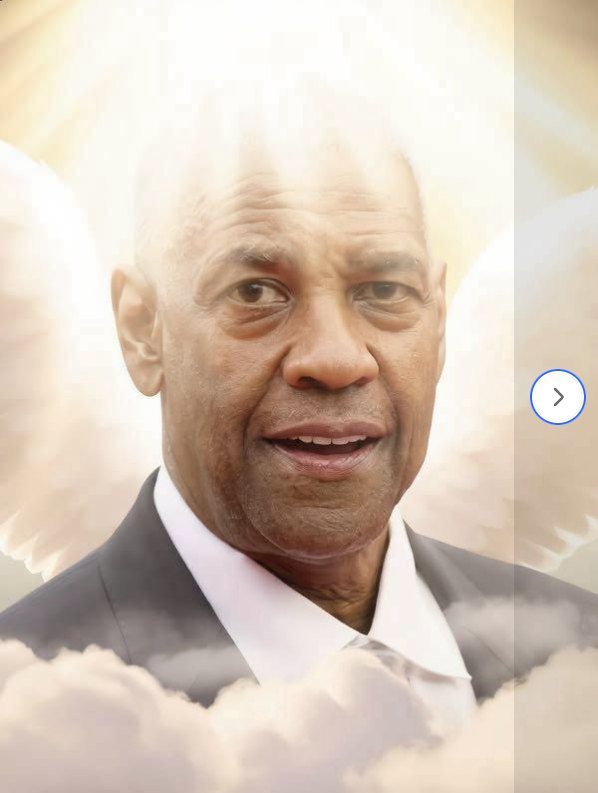
From powerful dramas and courtroom stories to action thrillers and deeply emotional performances, Washington has built a career that demonstrates extraordinary range. He can command a scene with a single look, inspire audiences with a powerful speech, and then deliver a quiet performance that reveals an entirely different side of his talent.

Today, when people look back at his remarkable career, the word “legend” feels completely appropriate.

Before becoming one of Hollywood’s most respected leading men, Denzel Washington developed his craft through theater and television. His early work gave audiences a glimpse of the qualities that would eventually define his career: discipline, charisma, intelligence, intensity, and an extraordinary ability to make complicated characters feel human.

Washington first gained major attention through the television series St. Elsewhere, where he played Dr. Philip Chandler. The role introduced him to a wide audience and helped establish him as a serious young actor.

Washington soon began taking on increasingly challenging film roles, proving that he was capable of far more than simply playing the traditional Hollywood leading man.

One of the defining moments of his early career came with Cry Freedom, in which he portrayed South African anti-apartheid activist Steve Biko. His performance earned him an Academy Award nomination and demonstrated the extraordinary emotional power he could bring to historical and political stories.

In the film, Washington played Private Silas Trip, a soldier fighting during the American Civil War. His performance was intense, emotional, and unforgettable.

Washington won the Academy Award for Best Supporting Actor for the role, establishing himself as one of the most important performers of his generation.

But his career was only beginning to reach its greatest heights.

Over the following decades, Washington appeared in films that became major parts of modern cinema.

He played Malcolm X in Spike Lee’s acclaimed film Malcolm X, delivering a performance so commanding that audiences could almost forget they were watching an actor.

Washington’s portrayal captured Malcolm X’s transformation, intelligence, anger, confidence, spirituality, and evolving understanding of the world.

It became one of the defining performances of Washington’s career and earned him another Academy Award nomination.

Washington continued demonstrating his versatility through films such as Philadelphia, The Pelican Brief, Crimson Tide, Courage Under Fire, The Hurricane, Remember the Titans, and Training Day.

In Philadelphia, he portrayed a lawyer forced to confront prejudice and fear while defending a man suffering from AIDS.

In The Hurricane, he played boxer Rubin “Hurricane” Carter, bringing enormous emotional weight to the story of a man who spent years fighting against a wrongful conviction.

In Remember the Titans, Washington played football coach Herman Boone, creating a character whose authority was matched by his determination to bring together a divided team.

As Detective Alonzo Harris, Washington showed audiences a completely different side of his talent. Harris was charismatic, intelligent, intimidating, manipulative, and morally corrupt.

The performance was so powerful that it completely transformed Washington’s usual screen image.

For decades, audiences had often seen him as a principled hero or honorable leader. In Training Day, he became the danger.

Washington’s performance earned him the Academy Award for Best Actor and became one of the most memorable portrayals of a morally complex character in modern film.

One of the reasons audiences remain fascinated by Denzel Washington is that his characters rarely feel simple.

Even when he plays a hero, there is usually something underneath the surface.

His characters can carry pain, anger, regret, pride, responsibility, fear, or uncertainty.

That emotional complexity gives his performances their power.

Washington also possesses something that cannot easily be taught: presence.

When he enters a scene, audiences pay attention.

He does not always need dramatic music, action sequences, or long speeches. Sometimes a pause, a glance, or a change in his voice is enough to completely change the atmosphere.

That quality has made him one of the most respected actors of his generation.

For fans, discussing Denzel Washington means discussing scenes that have become part of popular culture.

There are the powerful speeches from Remember the Titans.

The unforgettable transformation in Malcolm X.

The moral questions raised by Philadelphia.

And the many other performances that have continued to introduce Washington’s work to new generations.

His career has never been defined by one genre.

He has played soldiers, lawyers, detectives, athletes, activists, fathers, criminals, coaches, and ordinary people placed in extraordinary circumstances.

That versatility is one of his greatest achievements.

A successful acting career is not measured only by awards or box-office numbers.

Denzel Washington has influenced the way audiences understand what a leading man can be.

His characters can be powerful without being invincible. They can be intelligent without being emotionless. They can be flawed while still remaining deeply human.

He has shown that strength and vulnerability can exist within the same character.

That balance has become one of the defining qualities of his work.

Washington’s career has also extended beyond acting.

He has directed films, produced projects, worked extensively in theater, and continued challenging himself creatively rather than simply repeating the roles that made him famous.

That commitment to the craft has helped keep his career relevant across multiple generations.

Perhaps that is what makes his story so remarkable.

Hollywood has changed dramatically during Washington’s career.

The way movies are produced and distributed has changed.

Yet Denzel Washington’s performances continue to connect with people.

His greatest films are not remembered simply because they had famous actors in them.

They are remembered because Washington made the characters feel real.

He gave audiences people they could admire, question, fear, understand, or even dislike.

And that is what great acting is supposed to do.

Fans remember Denzel Washington in many different ways.

Others remember the lawyer in Philadelphia, the boxer in The Hurricane, or the countless other characters he has portrayed throughout his career.

But perhaps the most important memories are personal.

A speech that stayed in someone’s mind for years.

A character whose words became part of everyday conversation.

Actors can become part of people’s lives in ways they may never fully realize.

A performer can be a stranger to millions of people while simultaneously feeling strangely familiar.

And Denzel Washington has spent decades creating that kind of connection.

When people call Denzel Washington a legend, they are not simply talking about awards.

They are talking about the ability to walk into almost any story and make it feel important.

His greatest legacy may not be one specific movie.

It may be the collection of characters, performances, speeches, emotional moments, and unforgettable scenes he has given audiences over the course of his career.

His work will continue to be discovered by younger viewers who were not even born when some of his most famous films were released.

They will watch Malcolm X for the first time.

They will experience Training Day and meet Alonzo Harris.

They will discover Glory, Philadelphia, The Hurricane, Remember the Titans, and the many other films that helped define his career.

And they will understand why his name became synonymous with excellence in Hollywood.

Denzel Washington may have spent decades pretending to be heroes, villains, soldiers, lawyers, coaches, athletes, activists, detectives, and ordinary men facing extraordinary circumstances.

But his greatest achievement was simply becoming unforgettable.

That is something time cannot easily take away.

As long as audiences continue watching his films, Denzel Washington’s work will continue to speak.

That is the real legacy of a legend—not an ending, but a reminder.

A reminder of the strength, emotion, intelligence, humanity, and unforgettable performances that made millions of people press play and stay until the credits rolled.

Denzel Washington did not simply build a career in Hollywood. He built a legacy.

You probably missed this

You probably missed this

by
You probably missed this

You Probably Missed This — And Here’s Why It Matters

Every day, countless stories, moments, announcements, photographs, and small details compete for our attention. With so much information appearing online, it is surprisingly easy to miss something important—or simply something interesting.Edit Photos

Fat loss recipes

Healthy cooking guides

Find Recipes

A headline may appear for a few seconds before disappearing beneath dozens of newer posts. A photograph may be shared thousands of times without people noticing a small detail in the background. A public may receive little attention at first and become a much bigger topic days later.

That is why phrases such as “You probably missed this” continue to attract attention. They suggest that there is another side to a familiar story, a detail that may have escaped notice, or a moment worth revisiting.

But what makes these overlooked details so fascinating?

The Internet Moves Faster Than We Do

One of the biggest reasons people miss interesting information is simple: there is too much of it.

News websites publish updates throughout the day. Social media platforms continuously refresh their feeds. Videos, photographs, interviews, comments, and reactions appear almost simultaneously.Binge Hit Series

Even someone who spends several hours online can easily miss something that thousands of other people have already seen.

Track Exec Orders

Read Opinions

photographs

This creates an unusual situation. A story can be publicly available while still remaining largely unnoticed by a particular audience.

Sometimes, people discover an old photograph and realize that they had never seen it before. Other times, a short statement made during an interview suddenly becomes relevant because circumstances have changed.

The information was not necessarily hidden.

People simply overlooked it.

Small Details Can Change the Way We Understand a Story

A photograph, for example, can contain much more information than the caption suggests.Edit Photos

People naturally focus on the main subject. If a famous person is pictured at an event, viewers may immediately look at the person rather than the surrounding environment.

Yet the background can sometimes reveal additional context.

Who else was there?

What was happening around the main subject?

Was the photograph taken before or after an important event?

What was the atmosphere like?

These questions can make an ordinary image much more interesting.

The same principle applies to interviews and public statements. A short sentence that receives little attention when originally spoken may later become one of the most discussed parts of a conversation.

Why People Love Looking Back

There is something naturally appealing about revisiting the past.

Old photographs, forgotten interviews, previous announcements, and earlier public appearances allow people to see familiar subjects from a different perspective.

photograph

photo

Edit Photos

This does not necessarily mean that the original moment contained a secret.

Sometimes the fascination comes from seeing how much circumstances have changed.

A photograph from ten years ago may show people at a completely different stage of their lives. An old interview may reveal interests or ambitions that later became important. A simple event may take on new significance because of what happened afterward.Edit Photos

Looking back can therefore create a stronger sense of context.

The Detail May Be Smaller Than You Think

When people hear the phrase “You probably missed this,” they may expect a dramatic revelation.

In reality, the overlooked detail can be surprisingly ordinary.

It might be a date.

A location.

A brief comment.

A person standing in the background.

A particular piece of clothing.

An expression captured in a photograph.

Or simply the fact that an event happened much earlier than many people realize.

The interesting part is not always the detail itself. Sometimes it is the realization that thousands of people looked at the same material without noticing the same thing.

Social Media Makes Forgotten Moments Visible Again

Social media has created a powerful mechanism for bringing old content back into public discussion.

A photograph posted years ago can suddenly become popular after someone shares it again. An old video can gain millions of views after being discovered by a new audience.Edit Photos

Explore History

Buy Maps

Learn Arabic

This happens frequently because social media audiences are constantly changing.

Someone who was not interested in a particular subject five years ago may become deeply interested today.

As a result, older material can suddenly feel new.

The original publication date remains the same, but the audience experiencing it may be completely different.

Context Is Just as Important as the Detail

There is an important distinction between discovering an overlooked detail and creating a misleading story around it.

A photograph should be understood in its proper context.Edit Photos

An old quote should be considered according to when and why it was made.

A video should be checked against the full recording rather than a short edited clip.

And a claim shared online should not automatically be treated as established fact simply because it appears repeatedly.

This is particularly important when a headline uses dramatic language.

Curiosity can be useful, but curiosity should lead to verification rather than assumption.

Why Familiar Faces Attract So Much Attention

When a story involves a well-known public figure, even small details can generate enormous interest.

People naturally become curious about changes in appearance, relationships, careers, public activities, and personal milestones.

A photograph that might seem ordinary when viewed without context can become significant when people recognize the individuals involved.

However, public interest does not automatically make every online interpretation accurate.

Images can be misunderstood.

Captions can be incomplete.

Dates can be incorrect.

And social-media users can sometimes repeat an assumption until it begins to look like a fact.

That is why responsible readers should separate what is visible from what is being claimed about it.

The Difference Between an Observation and a Claim

This distinction is simple but extremely important.

An observation describes what can actually be seen or documented.

For example, someone might say that a photograph shows several people standing together at an event.Edit Photos

That is an observation.

A claim might be that the people were discussing a particular private matter.

Unless there is reliable evidence supporting that interpretation, it remains a claim.

The difference may seem small, but it can dramatically change the meaning of a story.

Online audiences often move quickly from “I noticed this” to “This must mean that.”

Those are not the same thing.Why “You Probably Missed This” Works So Well

The phrase itself creates curiosity.Browse Art Prints

It speaks directly to the reader and creates a feeling that there is something worth discovering.

It also plays on a common human experience: nobody wants to feel as though they missed an important detail.

This is especially powerful when the subject is already familiar.

If people have seen a celebrity photograph hundreds of times, they may assume there is nothing new to discover.

Then someone points out a detail they had never noticed.

Suddenly, the same photograph feels different.

The image has not changed.

The viewer's attention has.

Revisiting the Original Source

One of the best ways to understand an overlooked detail is to return to the original source whenever possible.

Instead of relying exclusively on reposts, cropped images, short clips, or screenshots, readers can look for the earliest available version.

This can reveal important information.Search Guides

The original caption may provide a date.

A longer video may explain what happened before or after a particular moment.

An official statement may clarify wording that became distorted through repeated sharing.

Get Writing Tools

Learn DIY Skills

Browse Art Prints

Sometimes the original source confirms the popular interpretation.

Other times, it provides a much more ordinary explanation.

Either way, checking the source improves understanding.

The Importance of Dates

Dates are among the easiest details to overlook—and among the most important.

A photograph from 2015 can look surprisingly recent when it is reposted in 2026.

An old statement can circulate as though it were made yesterday.Browse Art Prints

A past event can be presented without enough context to make readers realize how much time has passed.

This can create unnecessary confusion.

Whenever a story begins circulating again, one of the first questions worth asking is:

When did this actually happen?

That single question can change the entire interpretation.

Why Old Content Can Feel New

The human brain does not experience information solely according to its publication date.

If someone encounters an old story for the first time, it feels new to them.

Track Exec Orders

Read Opinions

photographs

This is one reason older content can become viral again.

A new audience may discover a photograph, interview, or video and react as though it has just been released.Edit Photos

The renewed attention can then encourage others to share it, creating a second wave of interest.

Eventually, people who remember the original event may be surprised to see it trending again.

What Readers Should Look For

When encountering an intriguing “You probably missed this” story, there are several useful questions to ask.

What exactly is being shown?

When was it originally published?

Who created or published the material?

Is the caption supported by the original source?

Are important details missing?

Has the photograph or video been cropped?

Are people presenting an interpretation as though it were a confirmed fact?

These questions do not eliminate curiosity.

They make curiosity more useful.

The Internet Rewards Attention

Online platforms are designed around attention.

The more interesting a headline appears, the more likely people are to stop scrolling.

This is not necessarily a problem. Curiosity is one of the reasons people discover new ideas and stories.

Edit Photos

photograph

photo

The challenge comes when dramatic wording becomes more important than accuracy.

A headline can encourage someone to read.

The article should then provide the context needed to understand the subject properly.

Readers deserve both curiosity and clarity.

Sometimes the Overlooked Detail Is the Most Human One

Among all the photographs, headlines, and viral moments circulating online, some of the most memorable details are surprisingly simple.Edit Photos

A smile.

A gesture.

A handwritten note.

A family member standing nearby.

A familiar location.

A moment of laughter.

These details can remind people that major public stories are often made up of ordinary human moments.

Behind a headline is usually a real event involving real people, real places, and a specific point in time.

Remembering that can make online conversations more thoughtful.

A Moment Worth Revisiting

The next time you encounter a headline saying, “You probably missed this,” it may be worth taking a second look—but also taking a second to verify.

Perhaps there really is an interesting detail that escaped attention.

Perhaps an old photograph has returned because a new generation has discovered it.

Perhaps a forgotten statement provides useful context.

Or perhaps the headline is simply designed to create curiosity.Browse Art Prints

The best approach is to remain interested without immediately jumping to conclusions.

Look carefully.

Check the date.

Find the original source.

Separate what is documented from what is speculation.

And most importantly, allow the evidence to tell the story.

Final Thoughts

The digital world moves incredibly quickly, but interesting details do not always disappear forever.

Sometimes they return years later.

Sometimes an old photograph becomes relevant again.

Sometimes a forgotten statement receives new attention.

And sometimes the smallest detail becomes the part of a story that people remember most.

That is why looking beyond the headline can be so valuable.

You may indeed have missed something.

But discovering it should be about more than finding a dramatic detail. It should also be about understanding the context surrounding it.

In an online environment where information travels faster than ever, careful attention has become a valuable skill.Search Guides

The next time something catches your eye with the words “You probably missed this…”, pause for a moment.

Oscar Winning Hollywood Legend Di e

Oscar Winning Hollywood Legend Di e

by
Oscar Winning Hollywood Legend Di e

The entertainment world is remembering acclaimed American actor Robert Duvall, whose remarkable career left a lasting impact on generations of filmmakers and movie audiences. According to a statement released by his family, Duvall passed away peacefully at his home in Middleburg, Virginia, at the age of 95, surrounded by his wife and loved ones. His passing marks the end of a career that helped define some of the most memorable moments in modern cinema.

Born on January 5, 1931, in San Diego, California, Duvall developed a passion for acting at an early age. After serving in the United States Army, he studied acting alongside several future Hollywood stars and gradually established himself as a talented performer. His dedication to the craft, combined with his ability to portray a wide range of characters, earned him respect throughout the entertainment industry.

Duvall rose to international recognition through a series of unforgettable film performances. His portrayal of Tom Hagen in The Godfather and The Godfather Part II introduced audiences to his calm yet commanding style, while his unforgettable role as Lieutenant Colonel Bill Kilgore in Apocalypse Now became one of the most recognizable performances in film history. Throughout his career, he consistently delivered thoughtful and authentic performances that resonated with viewers.

In 1984, Duvall received the Academy Award for Best Actor for his leading role in Tender Mercies. The performance showcased his ability to bring emotional depth and realism to complex characters. Over the years, he earned seven Academy Award nominations, reflecting the consistent quality of his work across multiple decades. His achievements also included Golden Globe Awards, Emmy recognition, and numerous honors from film organizations around the world.

Beyond the awards, Duvall was respected for his professionalism, humility, and commitment to storytelling. Whether appearing in major Hollywood productions or smaller independent films, he approached every role with the same level of care and dedication. Colleagues frequently spoke about his strong work ethic and willingness to support fellow actors on set. His performances often demonstrated that subtlety and authenticity could be just as powerful as dramatic spectacle.

Throughout more than sixty years in the entertainment industry, Duvall appeared in a wide variety of films and television productions, including Lonesome Dove, The Apostle, Open Range, and many other acclaimed projects. His ability to adapt to different genres allowed him to remain relevant across generations of audiences, while his influence could be seen in the work of countless actors who followed. Following news of his passing, tributes were shared by fellow performers, directors, film historians, and fans around the world. Many reflected on his extraordinary body of work and the lasting contribution he made to American cinema. His performances continue to be celebrated not only for their technical excellence but also for the humanity and sincerity he brought to every character.

Although Robert Duvall is no longer with us, his legacy lives on through the films and stories that continue to inspire audiences. His work remains an important part of cinematic history, ensuring that future generations will have the opportunity to discover and appreciate one of Hollywood's most accomplished actors.

Breaking news Korea gives the order

Breaking news Korea gives the order

by
Breaking news Korea gives the order

(R) Lažni alarmi: Pojasnitev poročil o vojaških akcijah v Koreji.

17. oktober 2026

Kr

Nedavni naslovi novic so na spletu povzročili široko zaskrbljenost in zmedo, saj trdijo, da je Koreja izdala ukaz za napad na drugo državo. Ta poročila so se hitro razširila po družbenih omrežjih in sprožila razprave, debate in v nekaterih primerih paniko. Vendar pa so bile po skrbnem preverjanju zaupanja vrednih virov te trditve potrjene kot napačne.

Pomembno je, da se na takšne dezinformacije odgovori takoj, saj imajo lahko lažna poročila o vojaških akcijah resne posledice, od nepotrebnega vznemirjanja javnosti do širjenja škodljivih govoric. Razumevanje dejstev, virov in konteksta, ki obkrožajo takšne naslove, je bistvenega pomena za vse, ki se znajdejo v današnjem hitro spreminjajočem se novičarskem okolju.

Razumevanje situacije

Trditve

Viralna zgodba je namigovala, da je korejska vlada odobrila vojaški napad na drugo državo, kar je sprožilo strah pred stopnjevanjem regionalnega konflikta. Objave na družbenih omrežjih in nekatere spletne strani so trditev še okrepile, pogosto brez navajanja verodostojnih virov ali uradnih izjav.

Resničnost

Preverjena poročila uradnih vladnih kanalov in uglednih medijskih organizacij kažejo, da takšnega vojaškega ukaza ni bilo. Južnokorejski uradniki so poudarili, da vlada aktivno spremlja mednarodne napetosti, si prizadeva za ohranjanje regionalne stabilnosti in daje prednost varnosti svojih državljanov. Ni dokazov o načrtovanem napadu ali kakršni koli vojaški akciji, ki bi se ujemala s trditvami, objavljenimi na spletu.

Kako se širijo dezinformacije

Lažne novice, zlasti o temah z visokimi vložki, kot so vojaške akcije, se po spletu običajno hitro širijo. K temu prispeva več dejavnikov:

Algoritmi družbenih medijev: Platforme pogosto širijo senzacionalne vsebine, zaradi česar so bolj vidne ne glede na točnost.

Strah in tesnoba: Novice, ki nakazujejo nevarnost ali konflikt, sprožijo močne čustvene odzive, kar poveča deljenje in angažiranost.

Naslovi, ki pritegnejo pozornost: Nekatera spletna mesta namerno ustvarjajo naslove, ki pritegnejo pozornost, da bi pritegnila promet, tudi če zgodbi manjkajo verodostojni dokazi.

Razumevanje teh mehanizmov pomaga javnosti, da ostane kritična do nepreverjenih poročil in zmanjšuje širjenje dezinformacij, ki povzročajo paniko.

Pomen zanašanja na zaupanja vredne vire

Ko se soočimo z zaskrbljujočimi novicami, je bistveno, da informacije preverimo prek zanesljivih kanalov. Med zaupanja vredne vire mednarodnih novic spadajo:

Uradne vladne izjave in sporočila za javnost

Ugledne svetovne tiskovne agencije, kot so Associated Press, Reuters ali BBC

Strokovne analize priznanih političnih ali vojaških strokovnjakov

S posvetovanjem s temi viri se lahko posamezniki informirano odločijo in se izognejo deljenju nepreverjenih trditev, ki bi lahko povzročile nepotreben strah.

Vloga južnokorejskih uradnikov

Južnokorejske oblasti so dosledno dajale prednost mirnemu reševanju konfliktov in regionalni varnosti. Izjave vladnih predstavnikov pojasnjujejo, da je poudarek na diplomaciji, mednarodnem sodelovanju in zaščiti javnosti, ne pa na agresivnih vojaških akcijah.

Uradniki so ponovno poudarili pomen:

Spremljanje mednarodnega dogajanja za oceno morebitnih groženj

Ohranjanje miru javnosti z zagotavljanjem točnih informacij

Sodelovanje v diplomatskih pogovorih z zavezniki in sosednjimi državami

Ti ukrepi odražajo odgovoren pristop k regionalni varnosti, kar je v ostrem nasprotju s senzacionalnimi trditvami, ki krožijo po spletu.

Javne reakcije in odgovornost

Ko se pojavijo takšna lažna poročila, so odzivi pogosto mešani. Nekateri posamezniki lahko paničarijo, drugi pa lahko podvomijo v verodostojnost medijev. Pomembno je, da javnost:

Izogibajte se deljenju senzacionalnih novic brez preverjanja

Preden se odzovete, preverite več uglednih virov

Izobraževati sebe in druge o nevarnostih dezinformacij

Odgovorno uživanje in deljenje novic pomagata zmanjšati zmedo in spodbujata informiran in umirjen javni diskurz.

Lekcije iz lažnih poročil o virusih

Incident osvetljuje širše lekcije o sodobni informacijski krajini:

Kritično mišljenje je bistveno: Vsak naslov ne predstavlja preverjenih dejstev. Vzemite si čas za analizo vsebine.

Zaupajte verodostojnim medijem: Uveljavljene medijske organizacije upoštevajo stroge standarde preverjanja.

Izogibajte se krepitvi strahu: Deljenje zaskrbljujočih vsebin brez potrditve lahko poslabša tesnobo javnosti.

Ostanite obveščeni, ostanite varni: Natančne informacije posameznikom omogočajo sprejemanje racionalnih odločitev.

Z uporabo teh načel se lahko bralci bolje orientirajo v novičarskih ciklih in se izognejo zavajanju senzacionalističnih trditev.

Globalni kontekst

Regionalne napetosti v vzhodni Aziji so pogosto predmet mednarodne pozornosti. Medtem ko Južna Koreja nenehno spremlja in strateško načrtuje regionalno varnost, je ključnega pomena razlikovati med dejansko vojaško aktivnostjo in govoricami ali dezinformacijami.

Diplomatske poti se aktivno uporabljajo za reševanje konfliktov

Vojaške akcije, če sploh obstajajo, so predmet strogih protokolov in javnih objav

Javne špekulacije ne smejo nadomestiti dejanskega poročanja

Razumevanje tega konteksta pomaga preprečiti napačne predstave o namenih in politikah katere koli vlade.

Kaj to pomeni

Nedavna viralna trditev, da je Koreja odredila vojaški napad, je popolnoma napačna. Zanesljiva potrditev potrjuje, da ni načrtovanega ukrepanja, Južna Koreja pa še naprej daje prednost diplomaciji, varnosti in regionalni stabilnosti.

Ta situacija služi kot opomnik o pomembnosti:

Posvetovanje z zanesljivimi viri novic

Izogibanje širjenju nepreverjenih trditev

Ohraniti mirno kri kljub senzacionalističnim naslovom

Izobraževanje o razliki med preverjenimi dejstvi in ​​​​viralnimi govoricami

V svetu, kjer novice potujejo hitreje kot kdaj koli prej, sta odgovorna uporaba in deljenje informacij ključnega pomena. Z kritičnim pristopom k novicam in zanašanjem na verodostojne vire lahko javnost ostane obveščena, ne da bi podlegla nepotrebnemu strahu.